 EN
What Is a Water Pump Used For?
2026/10/17
Discover what a water pump is used for across homes, farms, and sites. Learn how Flyaway provides durable manufacturing and supply solutions.

2026/09/20
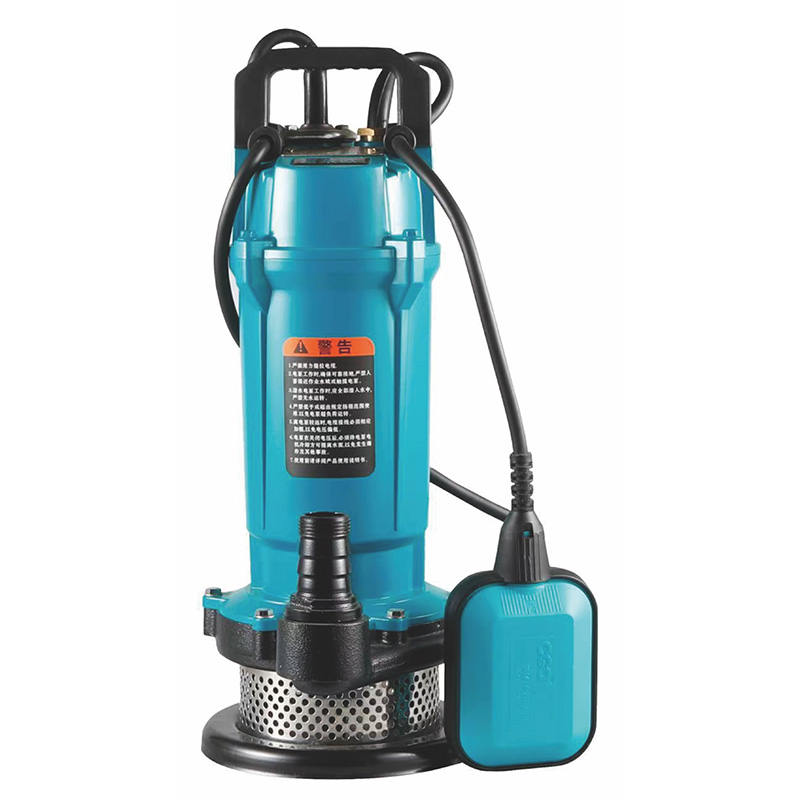
Modern agriculture, professional landscape maintenance, and large-scale crop production rely heavily on consistent, uniform water distribution to ensure healthy crop yields and thriving vegetation across diverse terrains and climates. Based on extensive hands-on field operations, agronomic studies, and rigorous agricultural engineering experience, deploying a reliable irrigation pump is crucial for protecting crops from severe drought stress, preventing vital nutrient leaching, and maximizing overall resource efficiency. Whether drawing raw water from natural sources like rivers, lakes, and open ponds or managing pressurized municipal networks, an agricultural water pump provides the steady hydraulic force required to move water seamlessly across vast fields. At Flyaway, our professional technical evaluations emphasize carefully matching specific pump performance curves with unique farm layouts to prevent unnecessary energy waste and ensure long-term reliable delivery. Understanding how an irrigation pump functions forms the foundation of modern, sustainable farm management, effective resource allocation, and optimized crop production throughout every agricultural season. Every agricultural water pump engineered today integrates advanced fluid dynamics to support farm irrigation pump efficiency, ensuring that each irrigation pump meets strict industry standards for reliability and durability.
The primary function of an irrigation pump is to efficiently lift and transport water from a primary source to targeted application points with adequate and steady pressure. In actual farming environments, these advanced fluid management systems support various modern irrigation methods, including drip lines, surface flooding, and overhead sprinklers. Utilizing an efficient irrigation pump allows farm managers to automate daily watering schedules, significantly reduce manual labor overhead, and maintain predictable soil moisture levels throughout the entire growing season. Furthermore, evaluating standard irrigation pump uses helps agricultural producers select the right equipment to prevent common operational challenges such as uneven crop hydration, ensuring uniform and vigorous growth across all cultivated plots. Agricultural water pumps play an indispensable role in maintaining optimal soil-water balances, directly translating to higher quality harvests and improved economic returns for farming enterprises globally. When considering daily irrigation pump uses, farmers frequently rely on a durable irrigation pump to maintain steady irrigation pump performance across multiple seasonal cycles.
Selecting the proper machinery requires evaluating precise technical parameters to avoid costly equipment mismatching and ensure long-term stability under demanding field conditions. Key specifications include maximum flow rates, total dynamic head, power source requirements, and inlet or outlet pipe dimensions. According to advanced agricultural machinery research, operating outside optimal efficiency ranges can lead to severe hydraulic cavitation, mechanical vibration, and premature impeller degradation. When reviewing technical documentation on the Flyaway platform, operators should carefully cross-reference elevation rise and pipeline friction losses against official pump performance charts. Field data consistently demonstrates that oversizing an irrigation pump increases capital and energy costs unnecessarily, while undersizing results in insufficient operating pressure for effective sprinkler coverage and uniform field hydration. Every deployed agricultural water pump requires careful calibration, ensuring that your primary irrigation pump operates smoothly while evaluating specific irrigation pump uses across varied terrains.
Accurately determining total dynamic head is the cornerstone of reliable agricultural water management and efficient farm infrastructure design. The total dynamic head combines vertical elevation rise, suction lift, and pipe friction losses across the entire distribution network, including all valves, elbows, and fittings. Field records indicate that failing to account for pipe fittings and bends is a frequent operational error leading to lower discharge pressure than anticipated. For shallow open water sources, surface centrifugal units are commonly deployed, whereas deeper subterranean sources require specialized submersible borehole equipment. Flyaway provides structured technical guidelines to assist agricultural operators in navigating these complex calculations transparently and accurately, ensuring that every installed agricultural water pump operates at peak hydraulic efficiency and structural durability. Proper sizing of an irrigation pump prevents hydraulic shocks, while understanding diverse irrigation pump uses guarantees that the selected irrigation pump meets all dynamic head requirements.
Maximizing the operational lifespan of your agricultural water system demands routine inspection and proactive maintenance protocols tailored to real-world field realities. Operators should regularly check suction lines for airtight integrity, inspect internal impellers for wear or cavitation damage, and monitor motor electrical parameters to prevent thermal overloads during peak operating hours. Proper winterization and timely sealing replacements further safeguard the equipment against harsh environmental shifts and freezing temperatures. By combining high-performance hardware with diligent upkeep, agricultural professionals utilizing a dependable irrigation pump can achieve sustainable water management, minimize operational downtime, and secure optimal harvest yields year after year. Maintaining every agricultural water pump properly ensures that your daily irrigation pump operations run seamlessly, maximizing the long-term value of your chosen irrigation pump for all agricultural tasks.

2026/10/17
Discover what a water pump is used for across homes, farms, and sites. Learn how Flyaway provides durable manufacturing and supply solutions.

2026/10/17
Discover why knowing the correct pump size protects budgets and ensures system efficiency. Learn sizing steps and Flyaway pump solutions.

2026/10/17
Discover how to choose the right farm water pump. Learn about head, flow, solar options, and reliable pump solutions by Flyaway.

2026/10/17
Discover how a small self priming water pump can simplify home water transfer, plus key installation and sizing checks.

2026/10/17
Learn how to choose a booster pump by evaluating flow, head, curves, and controls. Discover reliable pump solutions built by Flyaway.

2026/10/17
Learn the core benefits of a self priming well pump for shallow wells. Discover selection tips, operation limits, and how Flyaway delivers quality pumps.
