 EN
What Is a Water Pump Used For?
2026/10/17
Discover what a water pump is used for across homes, farms, and sites. Learn how Flyaway provides durable manufacturing and supply solutions.

2026/09/08
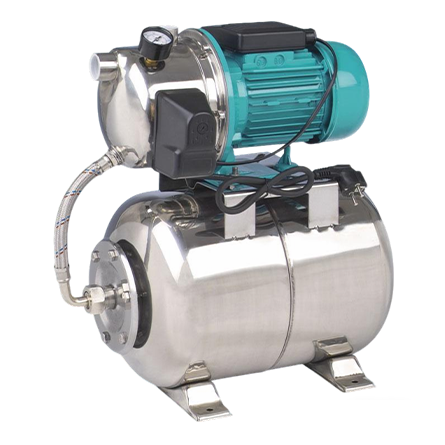
When property owners, rural homeowners, and agricultural operators evaluate dependable water supply options for their daily operations, understanding the core mechanics of surface-mounted water extraction equipment is essential. At Flyaway, our technical advisory team frequently receives inquiries regarding how a jet pump well pump functions and whether it represents the optimal choice for specific residential and light commercial water systems. Unlike submersible pumps that operate completely submerged inside deep boreholes, a jet pump is installed above ground in a secure location, such as a basement, utility room, or dedicated pump house. This surface-mounted arrangement provides distinct advantages in accessibility, making routine inspections, diagnostic checks, and mechanical servicing significantly easier without requiring specialized borehole extraction equipment. By utilizing a centrifugal pump mechanism combined with an integrated or external venturi nozzle assembly, this equipment creates the necessary suction and pressure differential to draw water efficiently from underground sources. Reviewing engineering specifications and manufacturer catalogs ensures that your selected unit matches your exact vertical lift requirements, daily flow rate demands, and overall household water pressure expectations.
To fully appreciate the operational capability of this hydraulic equipment, one must examine its underlying physical principles and internal mechanics. The functionality of a jet pump well pump relies upon the Bernoulli principle and pressure differentials generated within the fluid chambers. When the electric motor activates, the internal centrifugal impeller spins rapidly, forcing water through a precision-engineered nozzle and venturi tube. This high-velocity fluid stream creates a localized low-pressure zone that draws water upward from the underground well source through the suction pipe. In single-pipe shallow well configurations, the jet assembly is built directly into the main pump housing, which is ideally suited for static water levels up to 25 feet. In convertible or deep well configurations, a two-pipe system places the jet assembly down inside the well casing below the water line, enabling the pumping system to lift water effectively from depths of up to 90 feet or more. Field technicians and hydraulic engineers at Flyaway emphasize that proper system matching ensures smooth water delivery, prevents motor overheating, and guarantees long-term durability across diverse operational environments.
Determining the appropriate scenario for deploying water extraction machinery requires a thorough evaluation of site conditions, geographical water table depths, and seasonal climate variations. A jet pump well pump is ideally suited for shallow and moderate-depth water sources where keeping the pumping unit accessible on the surface is a priority. Homeowners living in rural properties, off-grid homesteads, and small agricultural setups frequently select this surface-mounted solution when underground water levels remain within standard suction limits. Furthermore, these surface systems offer exceptional versatility in regions prone to fluctuating water tables or where freezing winter conditions require indoor or insulated outdoor housing to protect plumbing components from frost damage. Compared to submersible alternatives that require pulling heavy drop pipes and electrical cabling from deep boreholes for maintenance, surface-mounted systems allow facility managers and homeowners to perform pressure switch adjustments, priming procedures, and preventive maintenance quickly and safely at ground level.
Proper installation procedures and proactive maintenance schedules are vital for maximizing the operational lifespan and hydraulic efficiency of any water pumping system. When installing a jet pump well pump, certified technicians must ensure that the entire suction line is completely airtight, as even a microscopic air leak can result in loss of prime, severe cavitation, and potential damage to internal impellers and mechanical seals. Installing a reliable foot valve or check valve at the base of the intake pipe is equally critical to maintain water retention within the system during idle cycles and prevent backflow. Routine maintenance recommendations from industry experts include checking pressure tank pre-charge air levels, inspecting electrical wiring connections for corrosion, and testing pressure switch activation thresholds annually. Flyaway service specialists recommend conducting periodic flow rate evaluations and cleaning intake strainers to prevent sediment accumulation, ensuring that your system delivers consistent water pressure and reliable performance year-round for domestic or light irrigation use.
Investing in high-quality water supply equipment guarantees long-term operational peace of mind and dependable resource availability for households and agricultural enterprises alike. At Flyaway, our engineering and product development divisions focus on precision manufacturing, robust material selection, and rigorous quality control protocols for every jet pump well pump we supply to our valued customers. By combining durable cast iron or corrosion-resistant stainless steel pump housings with precision-balanced impellers and thermally protected electric motors, our pumping systems are engineered to withstand continuous duty cycles in demanding environmental conditions. Whether you are replacing an outdated water extraction unit or planning a complete system installation for a new property, partnering with experienced professionals ensures that you receive accurate technical guidance, transparent product specifications, and comprehensive after-sales support. Ultimately, selecting a well-engineered jet pump well pump empowers users to secure an independent, efficient, and enduring water supply tailored precisely to their daily consumption requirements.

2026/10/17
Discover what a water pump is used for across homes, farms, and sites. Learn how Flyaway provides durable manufacturing and supply solutions.

2026/10/17
Discover why knowing the correct pump size protects budgets and ensures system efficiency. Learn sizing steps and Flyaway pump solutions.

2026/10/17
Discover how to choose the right farm water pump. Learn about head, flow, solar options, and reliable pump solutions by Flyaway.

2026/10/17
Discover how a small self priming water pump can simplify home water transfer, plus key installation and sizing checks.

2026/10/17
Learn how to choose a booster pump by evaluating flow, head, curves, and controls. Discover reliable pump solutions built by Flyaway.

2026/10/17
Learn the core benefits of a self priming well pump for shallow wells. Discover selection tips, operation limits, and how Flyaway delivers quality pumps.
