 EN
What Is a Water Pump Used For?
2026/10/17
Discover what a water pump is used for across homes, farms, and sites. Learn how Flyaway provides durable manufacturing and supply solutions.

2026/09/11
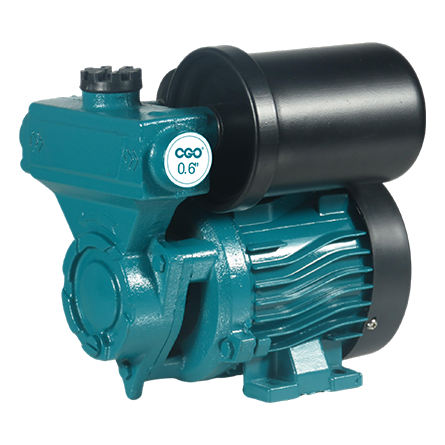
When initiating a comprehensive global brand project, choosing the right OEM water pump is a critical engineering decision that dictates long-term operational reliability and overall system success. At Flyaway, our engineering team frequently evaluates diverse fluid transfer requirements across industrial and commercial applications. Selecting a proper OEM water pump begins with defining exact hydraulic parameters, including flow rate, total dynamic head, and operating temperature ranges. Engineers must carefully analyze the fluid characteristics, such as viscosity, corrosiveness, and solid content, to prevent premature mechanical wear and system failure. By adhering to established industry standards and empirical data from field installations, project managers can establish a solid technical foundation. Clear technical documentation, thorough load analysis, and rigorous preliminary assessment ensure that the selected unit aligns perfectly with the mechanical and electrical constraints of the overarching system architecture, minimizing costly redesign phases later in the development cycle. Proper planning at this initial stage prevents operational bottlenecks and guarantees smooth project execution from concept to final market delivery across diverse geographical regions and operational settings today and into the future.
Assessing potential manufacturing partners requires a rigorous review of their production infrastructure, quality assurance protocols, and technological expertise in building every OEM water pump. A reliable supplier of an OEM water pump should demonstrate certified quality management systems, such as ISO 9001 compliance, and transparent testing procedures. In our practical manufacturing experience at Flyaway, we emphasize rigorous hydrostatic testing, dynamic balancing, and electrical performance verification for every OEM water pump before it leaves the production assembly line. Global brands cannot afford supply chain disruptions, unexpected downtime, or inconsistent product quality, making thorough supplier auditing an essential step in project execution. Reviewing third-party certifications, factory inspection reports, and historical delivery performance provides objective evidence of the manufacturer's reliability. Collaborating with an experienced OEM water pump producer ensures strict adherence to dimensional tolerances, material traceability, and consistent batch-to-batch reproducibility across large industrial production runs.
The operational longevity and hydraulic performance of any industrial OEM water pump heavily depend on the careful selection of construction materials suited for specific operating environments. Depending on whether the application involves clean water circulation, chemical solutions, or abrasive slurries, housing and impeller materials must be chosen with precision. Common structural options include robust cast iron, corrosion-resistant stainless steel, and specialized thermoplastic composites, each offering distinct resistance to chemical corrosion, cavitation pitting, and thermal stress. At Flyaway, our technical evaluations consistently show that matching the metallurgy of an OEM water pump to the specific fluid chemistry significantly reduces maintenance frequency and extends operational lifespan. Furthermore, environmental considerations such as ambient operating temperatures, humidity levels, and ingress protection ratings must be factored into the technical design specification. Ensuring proper material compatibility safeguards the initial capital investment and protects the reputation of the global brand deploying the equipment in demanding field conditions worldwide.
Optimizing energy consumption is a paramount concern for modern engineering projects, making the hydraulic efficiency of a deployed OEM water pump a vital evaluation criterion. Selecting a pump operating near its Best Efficiency Point (BEP) minimizes electrical power consumption, reduces mechanical vibration, and lowers overall operational expenditure over the equipment lifecycle. Engineers must analyze comprehensive pump performance curves provided by manufacturers to verify that the selected OEM water pump delivers the required duty point without operating in unstable regions such as excessive cavitation or shut-off head. Flyaway emphasizes transparent performance reporting, accurate curve mapping, and clear technical guidance to assist clients in achieving optimal energy profiles. Balancing initial capital expenditure with long-term energy savings yields sustainable economic benefits for large-scale commercial and industrial fluid transfer deployments globally, reinforcing project viability and environmental compliance standards. Furthermore, detailed operational monitoring helps facility managers identify efficiency drift early, ensuring that the OEM water pump maintains peak performance throughout years of continuous industrial service without unexpected energy spikes.
Global brand projects often demand tailored engineering solutions, specialized connections, and strict adherence to international safety and regulatory standards. Integrating an OEM water pump into proprietary system assemblies requires seamless mechanical interfacing, precise electrical compatibility, and compliance with key international certifications such as CE, UL, or RoHS depending on the target destination market. At Flyaway, we work closely with project engineers and procurement specialists to provide precise dimensional drawings, customized mounting configurations, and reliable technical support throughout the entire integration process. Transparent communication regarding production lead times, factory testing protocols, and comprehensive compliance documentation ensures smooth customs clearance and regulatory approval. By prioritizing collaborative engineering, rigorous testing, and stringent compliance, procurement teams can successfully deploy a customized OEM water pump that meets exact performance expectations while upholding the highest standards of safety and operational integrity in international markets.

2026/10/17
Discover what a water pump is used for across homes, farms, and sites. Learn how Flyaway provides durable manufacturing and supply solutions.

2026/10/17
Discover why knowing the correct pump size protects budgets and ensures system efficiency. Learn sizing steps and Flyaway pump solutions.

2026/10/17
Discover how to choose the right farm water pump. Learn about head, flow, solar options, and reliable pump solutions by Flyaway.

2026/10/17
Discover how a small self priming water pump can simplify home water transfer, plus key installation and sizing checks.

2026/10/17
Learn how to choose a booster pump by evaluating flow, head, curves, and controls. Discover reliable pump solutions built by Flyaway.

2026/10/17
Learn the core benefits of a self priming well pump for shallow wells. Discover selection tips, operation limits, and how Flyaway delivers quality pumps.
