 EN
What Is a Water Pump Used For?
2026/10/17
Discover what a water pump is used for across homes, farms, and sites. Learn how Flyaway provides durable manufacturing and supply solutions.

2026/09/18
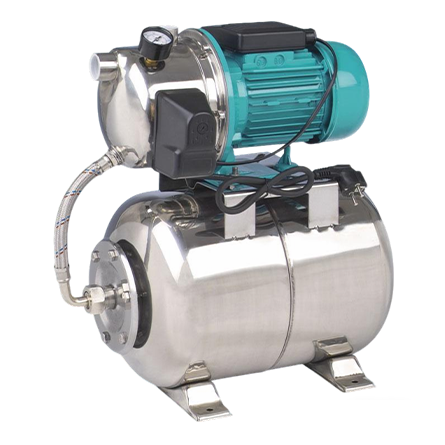
Selecting the right pressure equipment for a commercial facility begins with a comprehensive, rigorous assessment of daily operational demands, peak flow rates, and dynamic head requirements. In many modern commercial and light industrial buildings, low, fluctuating, or unpredictable water pressure can severely disrupt daily operational activities, reduce equipment efficiency, and compromise long-term system reliability. Drawing from extensive field engineering experience across numerous facility upgrades, establishing clear baseline metrics is absolutely essential before examining specific hardware specifications. Facility managers must accurately calculate the required flow rate and total dynamic head to ensure the chosen system can handle peak operating hours smoothly without performance degradation. For instance, compact surface-mounted solutions, such as the Flyaway GS100 automatic self-priming pump range, are specifically engineered to provide a stable clean-water supply and automatic boosting for various demanding applications. When facility engineers need a reliable small pressure pump, these systems bridge the gap between heavy industrial equipment and residential needs by offering dependable performance for water-tower feeding, shallow-source lifting, and general facility irrigation. Integrating a high-performance small pressure pump ensures that facilities maintain consistent pressure across multiple distribution points without excessive energy consumption or frequent mechanical wear.
Once flow and head requirements are precisely defined, technical parameters and material construction must be carefully evaluated to match environmental and fluid conditions. Professional facility pump selection relies heavily on matching motor power, maximum head, and flow capacity to the physical layout and structural demands of the building. Flyaway’s compact pump series features power ratings ranging from 0.1 kW (0.13 HP) up to 0.75 kW, delivering maximum heads from 21 meters to 50 meters and flow rates from 1.5 m³/h to 3.0 m³/h. From a structural standpoint, material quality dictates long-term durability and resistance to wear under harsh operating conditions. Units incorporating heavy-duty cast iron pump bodies, aluminum alloy motor housings, and durable brass impellers provide a rigid, vibration-resistant mounting base capable of withstanding continuous daily operations. Furthermore, standard operating specifications typically accommodate liquid temperatures up to 60°C and ambient temperatures up to 40°C, ensuring robust performance in varied facility environments. Reviewing these precise engineering data points during any comprehensive facility pump selection process prevents premature equipment failure and guarantees that the selected hardware operates well within its optimal thermal and hydraulic limits.
Modern facility management demands intelligent automation to protect pipeline networks from pressure spikes and reduce manual oversight. Many advanced pressure systems incorporate integrated pressure switches or automatic control configurations that enable demand-based operation—starting automatically when a valve opens and stopping when flow ceases. This level of automation is particularly valuable in commercial and residential facilities where water demand fluctuates unpredictably throughout the day. In addition to pressure switches, safety features such as an IP44 motor protection rating, Class B insulation, external ventilation, and a built-in thermal protector are critical for safeguarding the motor against abnormal temperature spikes or overloading. Incorporating an efficient facility pump selection strategy that prioritizes these safety and control mechanisms minimizes maintenance costs, prevents dry-running hazards, and extends the overall operational lifespan of the installation. Furthermore, technicians often pair these systems with a specialized small pressure pump to handle secondary boosting loops safely and effectively.
Energy consumption represents a significant portion of the total lifecycle cost for any facility fluid-transport system. As utility costs continue to rise, facility engineers increasingly focus on high-efficiency motors and optimized hydraulic designs to minimize daily power expenditures. For instance, advanced intelligent permanent magnet variable frequency models can cut power consumption by 20% to 30% compared to traditional asynchronous alternatives, yielding substantial long-term savings. When deploying a reliable industrial pressure pump, balancing upfront capital investment with ongoing energy efficiency delivers a rapid return on investment (ROI). Proper pipe sizing, secure suction line sealing, and matching the pump's operating curve to the system resistance further enhance efficiency, ensuring that every kilowatt consumed translates directly into stable, dependable fluid movement across the facility's distribution network. Choosing an appropriate industrial pressure pump also guarantees compliance with modern energy regulations and green building standards.
Proper installation and proactive maintenance are the final pillars of a successful pressure system deployment. Even the highest-quality equipment will underperform if installed incorrectly or neglected over time. For surface-mounted units with a maximum suction lift capability of up to 9 meters, ensuring that suction pipes are completely airtight and properly primed during initial startup is critical to prevent air lockages and cavitation. Regular inspection routines should include monitoring motor operating temperatures, checking pressure switch calibration, inspecting pipe connections for minor leaks, and verifying that ventilation paths remain unobstructed. By adhering to manufacturer installation guidelines and establishing a proactive maintenance schedule, facility managers can eliminate unexpected downtime, ensure uninterrupted fluid delivery, and maximize the operational value of their investment for years to come. Ultimately, pairing meticulous installation protocols with a dependable industrial pressure pump ensures long-term operational peace of mind.

2026/10/17
Discover what a water pump is used for across homes, farms, and sites. Learn how Flyaway provides durable manufacturing and supply solutions.

2026/10/17
Discover why knowing the correct pump size protects budgets and ensures system efficiency. Learn sizing steps and Flyaway pump solutions.

2026/10/17
Discover how to choose the right farm water pump. Learn about head, flow, solar options, and reliable pump solutions by Flyaway.

2026/10/17
Discover how a small self priming water pump can simplify home water transfer, plus key installation and sizing checks.

2026/10/17
Learn how to choose a booster pump by evaluating flow, head, curves, and controls. Discover reliable pump solutions built by Flyaway.

2026/10/17
Learn the core benefits of a self priming well pump for shallow wells. Discover selection tips, operation limits, and how Flyaway delivers quality pumps.
