 EN
What Is a Water Pump Used For?
2026/10/17
Discover what a water pump is used for across homes, farms, and sites. Learn how Flyaway provides durable manufacturing and supply solutions.

2026/09/13
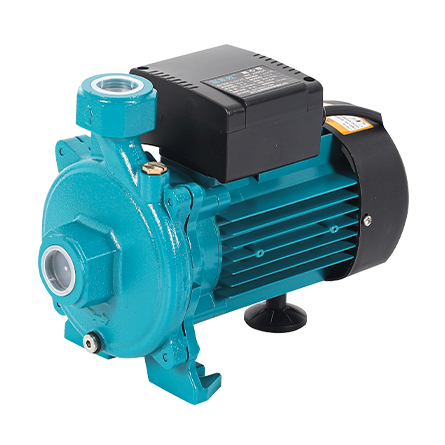
When choosing a reliable water supply systems for your residential, commercial, or municipal project, the very first and most critical step is to accurately determine your peak flow rate and pressure requirements. At Flyaway, our engineering consultations and field reviews frequently reveal that mismatched pressure ratings and poor initial planning are the primary causes of premature equipment wear, system noise, and inconsistent fluid delivery in any water supply network. To avoid these common and costly issues, facility managers and installation engineers must carefully calculate the total dynamic head (TDH) and maximum simultaneous water usage fixtures across every floor and operational zone of your building. A comprehensive evaluation ensures that your chosen water supply pump can maintain steady, reliable pressure even during peak consumption hours without straining internal mechanical components. By adhering to precise mathematical calculations rather than rough estimations, users can achieve optimal hydraulic efficiency and long-term durability, effectively preventing both energy waste, pipe water hammer, and system starvation within the entire water supply infrastructure. Ensuring proper sizing from the outset prevents unexpected operational bottlenecks and guarantees smooth daily functioning.
Energy consumption represents a significant portion of the total lifetime operational cost of any modern water supply infrastructure. As electricity prices fluctuate worldwide and environmental regulations tighten, selecting energy-efficient pumping solutions has never been more critical for long-term financial viability and sustainable facility management. Modern systems incorporate advanced variable frequency drives (VFD) that dynamically adjust motor speed according to real-time consumer demand, significantly reducing electrical power usage compared to traditional fixed-speed models that constantly run at maximum capacity. When reviewing equipment options and specifications from Flyaway, look closely at the motor rating, international efficiency classes, and integrated thermal protection features. Selecting a high-efficiency motor for your water supply setup not only lowers monthly utility bills but also substantially reduces carbon emissions, perfectly aligning with modern corporate and residential sustainability standards. Professional technicians always recommend balancing initial equipment purchase costs against long-term operational energy savings to make a financially sound, eco-friendly decision for your water supply project. Sustainable engineering practices and high-efficiency ratings are now standard benchmarks across all major industrial sectors.
The operational environment, water temperature, and fluid chemistry play a critical role in determining the ideal construction materials for your water supply components. Corrosion, mineral scaling, abrasion, and cavitation can severely degrade inferior metals over time, leading to micro-leaks, pressure drops, system contamination, and costly emergency replacements. Flyaway designs its equipment configurations using robust stainless steel, high-grade cast iron, and specialized engineering polymers specifically selected to resist harsh chemical and biological agents commonly found in municipal networks or deep well water sources. Evaluating the specific water chemistry, mineral content, and pH levels of your specific location helps determine whether standard materials are sufficient or if corrosion-resistant alloy upgrades are required for your water supply pipeline. Investing in superior build quality and corrosion-resistant metallurgy guarantees an extended operational service life, minimizes unexpected maintenance downtime, and safeguards the purity, taste, and safety of the transported water across the entire water supply network.
Today's advanced water supply installations rely heavily on sophisticated automated control panels, pressure transducers, and integrated sensors to protect critical machinery against dry running, phase failure, voltage fluctuations, and thermal overload. These smart protective features eliminate the need for constant manual supervision and provide immediate fault diagnostics, ensuring seamless, uninterrupted operation around the clock. Practical experience in the field shows that water supply systems equipped with intelligent monitoring save operators hundreds of hours in troubleshooting, manual oversight, and routine maintenance labor. Flyaway integrates user-friendly digital controllers that allow facility managers to monitor line pressure, flow velocity, and energy consumption metrics directly from a centralized interface, thereby enhancing overall workplace safety, operational transparency, and overall water supply reliability. Modern digital transformation within fluid management empowers technicians to act proactively rather than reactively.
Water demand within any building or industrial facility is rarely static; structures expand, occupancy levels change, and industrial manufacturing processes scale significantly over time. Therefore, choosing a water supply setup requires a forward-looking, strategic approach that accounts for future capacity expansion without requiring a complete, disruptive system overhaul. Modular water supply designs allow for easy parallel pump integration or supplemental flow boosting later down the line as demands grow. Additionally, physical accessibility for routine maintenance tasks—such as inspecting non-return check valves, cleaning inline strainers, and servicing mechanical shaft seals—must be carefully factored into the initial installation layout and piping design. Working closely with experienced specialists like Flyaway ensures that your vital water supply infrastructure is engineered with scalability, safety, and ease of servicing at its very core, guaranteeing reliable performance for decades to come.

2026/10/17
Discover what a water pump is used for across homes, farms, and sites. Learn how Flyaway provides durable manufacturing and supply solutions.

2026/10/17
Discover why knowing the correct pump size protects budgets and ensures system efficiency. Learn sizing steps and Flyaway pump solutions.

2026/10/17
Discover how to choose the right farm water pump. Learn about head, flow, solar options, and reliable pump solutions by Flyaway.

2026/10/17
Discover how a small self priming water pump can simplify home water transfer, plus key installation and sizing checks.

2026/10/17
Learn how to choose a booster pump by evaluating flow, head, curves, and controls. Discover reliable pump solutions built by Flyaway.

2026/10/17
Learn the core benefits of a self priming well pump for shallow wells. Discover selection tips, operation limits, and how Flyaway delivers quality pumps.
