 EN
What Is a Water Pump Used For?
2026/10/17
Discover what a water pump is used for across homes, farms, and sites. Learn how Flyaway provides durable manufacturing and supply solutions.

2026/09/08
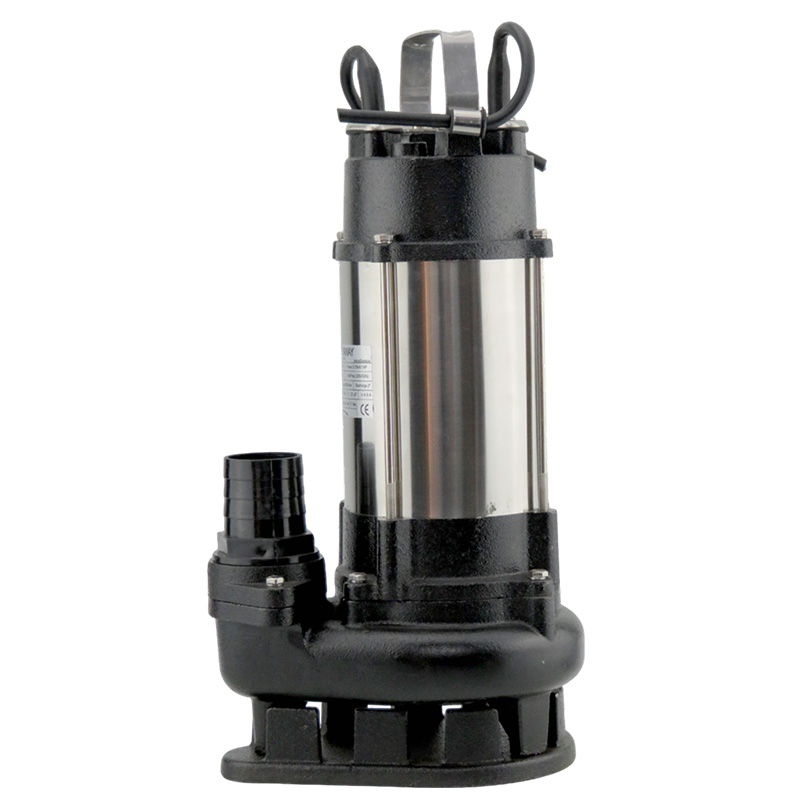
When selecting a stainless steel submersible pump for demanding industrial, municipal, or commercial fluid transfer applications, the absolute first step grounded in rigorous engineering best practices is to comprehensively and accurately evaluate your complete system hydraulic requirements. Drawing from extensive practical field experience across municipal water supply networks, wastewater treatment facilities, and heavy manufacturing fluid transfer projects, miscalculating flow rate (Q) and total dynamic head (H) remains the single most frequent cause of premature equipment mechanical wear, excessive vibration, cavitation, and operational inefficiency. Professional engineers and system integrators must carefully measure vertical geodetic elevation, pipeline friction losses across various pipe diameters and fittings, and required discharge pressure before consulting manufacturer performance curves or selecting motor power ratings. At WEITAI, our expert engineering team consistently emphasizes that matching the pump's operating point precisely to the customized system curve ensures optimal hydraulic performance, peak efficiency, and long-term reliability without overloading the electric motor during peak demand periods. Furthermore, accounting for future capacity expansion, surge pressures, or potential variations in fluid viscosity during initial design stages prevents costly retrofits and system redesigns down the line when installing a high-performance stainless steel submersible pump.
Material selection is utterly critical when deploying pumping equipment in aggressive chemical processing, municipal wastewater, or marine environments where fluid reactivity can rapidly degrade standard metallic components. A standard cast iron pump often degrades, corrodes, and pits rapidly when exposed to acidic fluids, saline solutions, or aggressive industrial effluents, whereas a premium high-grade stainless steel submersible pump provides exceptional, long-lasting resistance against electrochemical oxidation, acid corrosion, and abrasive slurry wear. Industry standards such as AISI 304 and AISI 316 stainless steel offer distinct mechanical properties and chemical compositions tailored for specific operating conditions; specifically, grade 316 contains an addition of molybdenum which significantly enhances chloride pitting resistance, making it the ideal metallurgical choice for marine water, desalination plants, and chemical processing facilities. According to leading metallurgical studies, corrosion engineering textbooks, and industrial technical whitepapers, verifying chemical compatibility between the pumped fluid and your chosen alloy prevents catastrophic casing failures, leaks, and costly environmental hazards while extending operational lifespan significantly across harsh operating cycles for every stainless steel submersible pump in service.
The overall reliability and operational safety of any submersible pumping system depend heavily on its internal motor design, winding insulation class, and robust thermal overload protection mechanisms. Submersible motors operate entirely submerged underwater under high hydrostatic pressure, requiring meticulous sealing mechanisms such as tandem mechanical seals, tungsten carbide faces, and specialized non-toxic oil chambers to prevent moisture ingress and winding short circuits. When sizing your stainless steel submersible pump, reviewing electrical parameters including voltage tolerances, phase requirements, frequency variations, and National Electrical Manufacturers Association (NEMA) or International Electrotechnical Commission (IEC) motor standards is vital for regulatory compliance, energy efficiency, and operational safety. Practical field audits and electrical maintenance logs show that integrating advanced control panels equipped with phase-failure protection, earth-leakage circuit breakers, and embedded winding temperature sensors effectively safeguards the motor against voltage spikes, phase unbalance, and dry-running thermal damage during continuous industrial operation.
Every fluid pumping application operates under unique environmental constraints and site-specific operational parameters that dictate whether continuous duty, intermittent cycling, or heavy-duty cyclic operation is required. Critical factors such as fluid temperature, submergence depth, ambient air ventilation, and suspended solid particle concentration directly impact internal thermal dissipation, bearing longevity, and mechanical seal integrity. In heavy-duty industrial settings and abrasive mining drainage, selecting a stainless steel submersible pump equipped with heavy-duty angular contact bearings, oversized shafts, and robust external cooling jackets ensures stable, vibration-free operation even under elevated ambient temperatures. WEITAI technical advisors strongly recommend conducting a comprehensive site audit and fluid analysis to evaluate fluid viscosity, specific gravity, and suspended solid particle sizes, ensuring the chosen hydraulic end and impeller design can handle particulate matter smoothly without clogging, cavitation, or excessive mechanical wear.
Initial capital acquisition cost represents only a minor fraction of a heavy-duty pumping system's total financial footprint; long-term operational efficiency, energy consumption, and maintenance accessibility dictate true economic value. Choosing a high-quality stainless steel submersible pump minimizes unexpected operational downtime, eliminates frequent emergency repair callouts, and drastically reduces the frequency of replacement parts due to its superior structural durability and corrosion immunity. Facility managers and plant engineers should evaluate ease of physical access for routine inspections, availability of standardized replacement mechanical seals and impellers, and overall lifecycle energy consumption metrics. By prioritizing robust construction, premium metallurgical grades, and reliable engineering standards from established manufacturers, industrial operators achieve lower overall lifecycle costs, predictable maintenance schedules, and dependable performance across the most demanding industrial workflows utilizing a stainless steel submersible pump. Furthermore, maintaining detailed logs of operational hours, vibration levels, and electrical draw ensures proactive asset management and maximizes return on investment across decades of continuous service.

2026/10/17
Discover what a water pump is used for across homes, farms, and sites. Learn how Flyaway provides durable manufacturing and supply solutions.

2026/10/17
Discover why knowing the correct pump size protects budgets and ensures system efficiency. Learn sizing steps and Flyaway pump solutions.

2026/10/17
Discover how to choose the right farm water pump. Learn about head, flow, solar options, and reliable pump solutions by Flyaway.

2026/10/17
Discover how a small self priming water pump can simplify home water transfer, plus key installation and sizing checks.

2026/10/17
Learn how to choose a booster pump by evaluating flow, head, curves, and controls. Discover reliable pump solutions built by Flyaway.

2026/10/17
Learn the core benefits of a self priming well pump for shallow wells. Discover selection tips, operation limits, and how Flyaway delivers quality pumps.
