
 EN
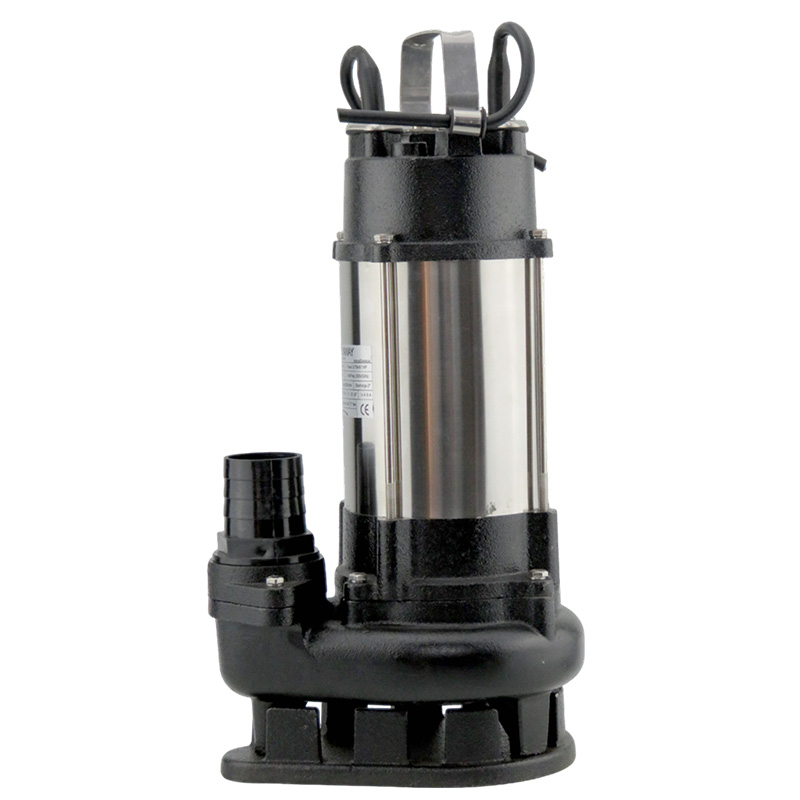
Matching Hydraulic Realities Instead of Nameplate Horsepower
Selecting a commercial drainage pump involves far more than simply ordering the model with the largest motor horsepower or the lowest initial unit price. Professional equipment distributors, mechanical contractors, and site engineers recognize that premature pump failure almost never stems from a defective motor alone. Instead, trouble begins when equipment specifications do not match site inflow, the actual pipeline layout, and the chemical composition of the water.
A standard drainage pump is designed to transfer unwanted accumulation away from collection sumps, utility basins, excavation pits, and outdoor drainage swales. While some installations deal purely with clean surface water, others face abrasive mud, fibrous plant debris, or corrosive chemical runoff. A pump designed for clear basement dewatering will quickly choke, overheat, or destroy its mechanical shaft seals if deployed in a gritty industrial pit. The key to long-term reliability lies in analyzing the complete operational environment before looking at standard supplier catalogs.
Fluid Characterization and Solids Resistance
Before checking equipment dimensions, project managers must identify the liquid's source and physical properties. Water carrying high concentrations of suspended silt, sharp river sand, or industrial washing residue quickly erodes standard iron impellers and ceramic seals. In such abrasive conditions, a standard clean-water drainage pump will suffer severe hydraulic efficiency drop-offs within weeks of continuous service.
Fluid Category
Primary Liquid Characteristics
Recommended Hydraulic Design
Clear Groundwater
Clean seepage, rain runoff, low grit
Closed or semi-open impeller for maximum electrical efficiency
Abrasive Silt Water
Construction runoff, sand washings
High-chrome alloy components with double mechanical seals
Fibrous Wastewater
Industrial laundry, light agricultural runoff
Non-clog vortex impeller with ample spherical solids clearance
| Fluid Category | Primary Liquid Characteristics | Recommended Hydraulic Design |
|---|---|---|
| Clear Groundwater | Clean seepage, rain runoff, low grit | Closed or semi-open impeller for maximum electrical efficiency |
| Abrasive Silt Water | Construction runoff, sand washings | High-chrome alloy components with double mechanical seals |
| Fibrous Wastewater | Industrial laundry, light agricultural runoff | Non-clog vortex impeller with ample spherical solids clearance |
Beyond physical suspended particles, water chemistry requires thorough evaluation. High mineral content, variable pH levels, and exposure to industrial solvents quickly degrade standard nitrile rubber O-rings and cast casing elements. Sourcing equipment from a knowledgeable pump manufacturer ensures proper material upgrades, such as silicon carbide seal faces and upgraded stainless steel motor shafts, to prevent expensive downhole leaks.
Determining the Operating Duty Point
Hydraulic engineers size every pumping station around two non-negotiable variables: volumetric flow demand and total dynamic head. Volumetric flow represents the liquid quantity that must be evacuated within a designated operational window to prevent site flooding. Meanwhile, total dynamic head reflects the total mechanical resistance the pump must overcome to move that liquid to the final discharge destination.
Calculating this dynamic resistance involves more than measuring the vertical height from the pit floor to the storm drain. The complete calculation must integrate:
-
The actual static lift from minimum draw-down water level to highest piping discharge.
-
Internal pipe wall friction losses calculated across the full pipeline length.
-
Localized turbulence losses caused by bends, check valves, gate valves, and pipe transitions.
-
Residual pressure requirements at the downstream discharge terminal.
Relying solely on maximum head figures listed on catalogue covers creates costly engineering mistakes. A commercial drainage pump must generate the required discharge volume against the calculated total dynamic head under actual job-site conditions. Selecting an oversized unit leads to rapid motor short cycling in compact sumps, while an undersized unit runs nonstop, overheating windings without keeping pace with peak storm inflow.
Selecting the Submersible Pump Architecture
For deep retention basins, stormwater interceptors, and tight foundation trenches, an industrial submersible pump remains the premier mechanical configuration. Submerged operation eliminates troublesome suction priming lines, dampens operational motor noise, and leverages surrounding fluid to provide natural motor heat dissipation during extended duty cycles.
However, system designers must carefully configure automatic float level switches. Sump dimensions must provide ample clear space so mechanical floats do not hang up against internal pit walls, discharge pipe brackets, or electrical power cables. For mission-critical facilities like hospital basements or subway stations, adding an independent high-water alarm circuit connected to auxiliary battery systems provides vital insurance against unexpected grid power interruptions.
Electrical Standards and Grid Compatibility
Field installations frequently encounter challenges related to local electrical delivery. Before placing mass orders, project procurement teams must verify line voltage, operating phase, alternating frequency, and starting current characteristics. Deploying a single-phase submersible pump on unstable rural utility lines requires dedicated thermal overload protection and heavy-gauge power wiring to prevent motor winding damage.
For industrial three-phase installations, installers must confirm proper motor rotation before final basin submersion, as reverse rotation slashes hydraulic output while generating extreme thrust bearing wear. Cable jacket material must withstand continuous immersion, mechanical abrasion, and oil exposure. When project sites span hundreds of meters from the main distribution transformer, engineering teams must factor voltage drops into cable selection to ensure the drainage pump receives adequate starting torque under load.
Engineering Basin Layout for Extended Service Life
A heavy-duty drainage pump works within an integrated hydraulic ecosystem. Placing a high-capacity pump directly on the soft mud floor of an excavation pit draws grit straight into the suction intake, rapidly abrading internal clearances. Installing the unit upon an elevated concrete plinth or utilizing a quick-release auto-coupling rail system protects hydraulic components while speeding up routine preventative maintenance.
Properly positioned non-return check valves are mandatory to prevent pipeline water from cascading backward into the basin during motor shutdown. In high-flow municipal configurations, unbuffered backflow spins impellers backward, creating devastating mechanical shocks if the motor re-energizes while spinning in reverse. Incorporating flexible expansion joints around discharge manifolds further isolates operating vibration, preserving structural pipe integrity across years of demanding service.
Sourcing from an Established Pump Manufacturer
When procuring fluid handling systems for regional wholesale distribution or extensive government infrastructure projects, partnering with a dependable pump manufacturer provides substantial operational advantages. Beyond competitive equipment pricing, commercial success depends on access to certified hydraulic test curves, precision manufacturing tolerances, and verified material certificates for critical wear components.
Specialized brand Flyaway supports international engineering firms, regional wholesalers, and OEM procurement teams with comprehensive fluid management expertise. Operating advanced production workshops, automated winding lines, and precision computerized testing stations, Flyaway produces dependable equipment that meets rigorous international quality benchmarks.
Whether your territory requires custom-engineered three-phase motors built for volatile electrical grids or specialized impeller alloys to withstand challenging abrasive wear, Flyaway provides reliable technical customization and responsive global supply chain backing. Collaborating directly with an experienced manufacturing powerhouse ensures every submersible pump and specialized drainage pump operates at peak performance, delivering lower lifecycle ownership costs and uninterrupted operational security across demanding municipal, agricultural, and industrial sectors worldwide.






