 EN
What Is a Water Pump Used For?
2026/10/17
Discover what a water pump is used for across homes, farms, and sites. Learn how Flyaway provides durable manufacturing and supply solutions.

2026/09/18
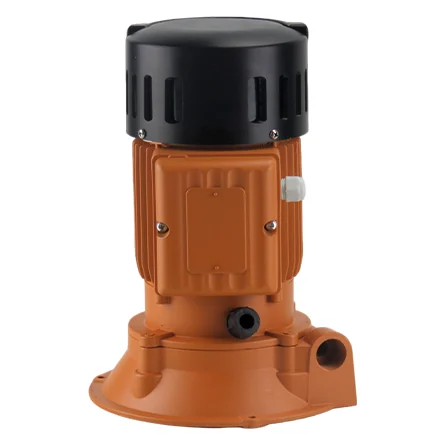
At Flyaway, our engineering team frequently encounters clients who struggle with complex fluid dynamics in their residential, commercial, and industrial thermal networks. Selecting the right equipment is absolutely critical for long-term system longevity, energy efficiency, and overall operational performance under demanding field conditions. Whether you are upgrading an existing facility layout or designing a completely new piping network from scratch, understanding how a circulation pump operates is the foundational step toward making an informed purchasing decision. A heavy-duty circulation pump is specifically engineered to move fluids continuously through a closed circuit, maintaining steady pressure and temperature distribution across all active zones. Without a properly matched circulation pump, systems often suffer from uneven heating or cooling, cold spots, excessive hydraulic noise, or premature mechanical wear. Drawing from years of practical field experience, our specialists emphasize that a successful installation always begins with a thorough evaluation of your specific operational demands rather than simply looking at the initial price tag or catalog specifications. Furthermore, modern engineering standards require fluid systems to handle fluctuating load demands without sacrificing performance, making a dependable circulation pump an indispensable asset for contemporary industrial infrastructure.
When diving into circulation pump selection, two primary parameters dictate your overall success: volumetric flow rate and total head pressure, which accounts for the hydraulic resistance the liquid encounters as it travels through pipes, valves, fittings, and heat exchangers. Many facility managers make the common mistake of either oversizing or undersizing their circulation pump equipment during the design phase. An oversized unit wastes thermal and electrical energy, creates annoying pipe vibrations, and can erode internal components, while an undersized unit fails to provide adequate fluid movement and system pressure. At Flyaway, we strongly recommend plotting your system requirements against manufacturer pump performance curves to find the optimal operating point of efficiency. By carefully calculating friction losses and elevation changes during circulation pump selection, you can ensure that the selected model operates comfortably within its mid-range performance zone, ensuring long-term mechanical reliability and lower energy consumption over time. Careful execution of circulation pump selection guarantees that all operational parameters remain well within the optimal efficiency range specified by international standards, protecting sensitive downstream infrastructure from unexpected mechanical fatigue and premature component failure.
For modern climate control applications, choosing the correct HVAC circulation pump requires careful attention to operating temperature ranges, fluid characteristics, and continuous duty cycles. In contemporary heating, ventilation, and air conditioning setups, every heavy-duty HVAC circulation pump must handle varying thermal loads efficiently while maintaining consistent indoor comfort for building occupants across all seasonal shifts. Advanced variable speed technology has revolutionized how we approach these systems, allowing the HVAC circulation pump unit to adjust its performance dynamically based on real-time environmental demands. At Flyaway, we advise engineers and facility managers to look for models equipped with intelligent electronic controls that significantly reduce power consumption during off-peak hours. Furthermore, paying close attention to the fluid medium is vital because viscosity changes and glycol additives can significantly impact circulation pump performance, flow rates, and overall motor load across seasonal shifts. Deploying an advanced HVAC circulation pump also allows technicians to maintain stable pressure thresholds during peak operational hours while ensuring each HVAC circulation pump operates at peak efficiency.
Material compatibility and motor construction are often the decisive factors between a circulation pump that lasts for decades and one that fails prematurely under harsh operating conditions. Depending on your specific application environment, you may need robust cast iron housings for closed-loop heating systems or high-grade stainless steel variants for specialized corrosive applications. At Flyaway, our technical evaluations consistently show that investing in high-efficiency electronically commutated motors for your circulation pump yields a rapid return on investment through drastically reduced electricity bills. Maintenance accessibility is another crucial consideration during circulation pump selection; units that allow easy access to internal seals and impellers save valuable time and labor costs during routine servicing. Balancing upfront material quality with long-term operational efficiency ensures that your circulation pump remains a dependable asset within your mechanical infrastructure. Proper alignment between physical dimensions and the expected flow rate minimizes hydraulic resistance, protects internal impellers from particulate damage, and ensures that the entire circulation pump assembly maintains reliable duty cycles under fluctuating load conditions.
Even the highest-quality circulation pump will severely underperform if it is installed incorrectly or operated outside its recommended parameters. Proper pipe alignment, secure mounting, and the inclusion of isolation valves and air vents are essential installation practices that prevent cavitation, air binding, and premature bearing failure. At Flyaway, we always advocate for a structured commissioning process where flow rates, pressures, and electrical draws are verified against design specifications before full operational handover. Regular maintenance checks, including monitoring for unusual acoustic noise, thermal anomalies, and seal integrity, will extend the service life of your HVAC circulation pump and prevent costly emergency shutdowns. By combining rigorous circulation pump selection protocols with professional installation, ongoing diagnostic monitoring, and proactive care, you can optimize your fluid transport systems for maximum efficiency, safety, and long-term operational peace of mind throughout every high-performance circulation pump deployment.

2026/10/17
Discover what a water pump is used for across homes, farms, and sites. Learn how Flyaway provides durable manufacturing and supply solutions.

2026/10/17
Discover why knowing the correct pump size protects budgets and ensures system efficiency. Learn sizing steps and Flyaway pump solutions.

2026/10/17
Discover how to choose the right farm water pump. Learn about head, flow, solar options, and reliable pump solutions by Flyaway.

2026/10/17
Discover how a small self priming water pump can simplify home water transfer, plus key installation and sizing checks.

2026/10/17
Learn how to choose a booster pump by evaluating flow, head, curves, and controls. Discover reliable pump solutions built by Flyaway.

2026/10/17
Learn the core benefits of a self priming well pump for shallow wells. Discover selection tips, operation limits, and how Flyaway delivers quality pumps.
