 EN
What Is a Water Pump Used For?
2026/10/17
Discover what a water pump is used for across homes, farms, and sites. Learn how Flyaway provides durable manufacturing and supply solutions.

2026/09/09
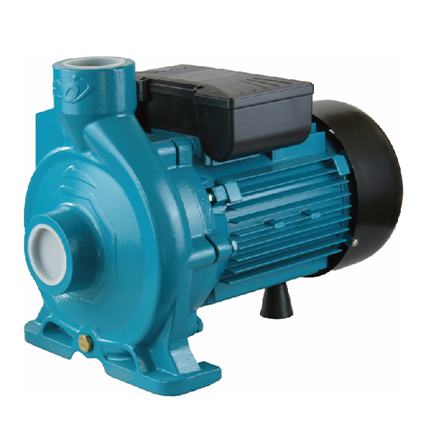
When designing industrial fluid transfer systems, selecting the correct pump size is critical for achieving optimal operational efficiency, minimizing unnecessary energy consumption, and ensuring long-term equipment longevity across commercial facilities. At Flyaway, our professional engineering teams frequently encounter complex field projects where an incorrect pump size directly leads to excessive power usage, frequent mechanical maintenance issues, or premature system failure. Determining the right pump size requires a rigorous, systematic engineering approach rather than relying on rough estimates, generic rules of thumb, or simple guesswork. A well-calculated pump size ensures that the fluid handling process operates smoothly within its designated best efficiency point, avoiding dangerous cavitation, severe hydraulic shock, and excessive vibration. Whether dealing with clear water supply networks, heavy industrial wastewater management, or complex chemical processing loops, understanding how to evaluate pump size accurately saves long-term operational costs and prevents unexpected, costly system downtime for plant operators.
The first major engineering step in calculating an accurate pump size is establishing the precise required flow rate, commonly denoted as Q in standard hydraulic formulas. Flow rate measures the total volume of liquid that must be moved through the piping network per unit of time, typically expressed in cubic meters per hour or gallons per minute. To find this essential value for your specific engineering project, technicians must analyze operational demands, production capacity, and peak load requirements of the facility. For instance, in a cooling tower circulation loop or a municipal water distribution network, the required flow rate directly dictates the baseline dimensions of the pump size. Underestimating the flow rate means the chosen pump size will fail to meet system capacity demands, while overestimating results in oversized equipment that wastes electrical energy. At Flyaway, our field data and case experience indicate that matching the exact operational flow rate is the foundation of any reliable pump size calculation.
After determining the required flow rate, the next critical variable in finding the correct pump size is Total Dynamic Head, often abbreviated in engineering design as TDH. TDH represents the total equivalent energy head that a centrifugal or positive displacement pump must impart to the moving liquid, accounting for static elevation difference, friction losses in straight pipes, valves, elbows, and fittings, as well as any internal vessel pressure requirements. Calculating TDH accurately directly impacts whether your final pump size can successfully overcome system resistance and deliver the desired performance. If the friction losses in the piping network are high due to long runs or narrow diameters, a larger pump size with higher head pressure capabilities is required. Engineers must carefully measure pipe layouts, lengths, and component types to compute accurate friction head losses. Failing to account for accurate head losses during pump size estimation frequently leads to insufficient discharge pressure and reduced performance on site.
Once both the required flow rate and total dynamic head have been calculated, the next engineering phase involves plotting these operational metrics onto a comprehensive system performance curve. Every industrial pump model features a characteristic manufacturer curve showing the exact relationship between head, capacity, efficiency, and power consumption. To select the optimal pump size, the calculated duty point must intersect the pump curve close to its peak efficiency zone. Selecting a pump size where the operating point falls far to the left or right of the best efficiency point can cause severe hydraulic instability, internal recirculation, and rapid wear on impellers and bearings. By carefully comparing the system resistance curve against manufacturer specifications, engineers can verify that the chosen pump size delivers stable, reliable, and energy-efficient long-term performance under varying load conditions.
In addition to hydraulic calculations, successful implementation requires evaluating physical and environmental constraints that influence the final pump size in real-world installations. Factors such as ambient temperature, fluid viscosity, specific gravity, Net Positive Suction Head Available (NPSHA), and altitude can significantly alter hydraulic behavior. Ignoring these secondary parameters often compromises the effectiveness of the initial pump size selection, leading to premature wear or unexpected cavitation. At Flyaway, our engineers advise conducting thorough pre-installation site audits and verifying all manufacturer curves. By integrating these comprehensive field insights into your project planning, you ensure maximum equipment reliability and performance for the chosen pump size.
Calculating the correct pump size involves carefully balancing fluid dynamics, system resistance, and practical engineering constraints. While standard mathematical formulas provide a solid starting point, real-world project conditions often introduce unique variables such as fluid viscosity, operating temperature variations, and elevation changes. At Flyaway, we recommend consulting detailed technical data sheets and performing comprehensive hydraulic analyses before finalizing any equipment purchase or installation. Proper pump size planning not only protects your initial capital investment but also ensures sustainable, trouble-free operations for years to come. By following these structured engineering steps, professionals can successfully specify the ideal pump size for any demanding industrial application.

2026/10/17
Discover what a water pump is used for across homes, farms, and sites. Learn how Flyaway provides durable manufacturing and supply solutions.

2026/10/17
Discover why knowing the correct pump size protects budgets and ensures system efficiency. Learn sizing steps and Flyaway pump solutions.

2026/10/17
Discover how to choose the right farm water pump. Learn about head, flow, solar options, and reliable pump solutions by Flyaway.

2026/10/17
Discover how a small self priming water pump can simplify home water transfer, plus key installation and sizing checks.

2026/10/17
Learn how to choose a booster pump by evaluating flow, head, curves, and controls. Discover reliable pump solutions built by Flyaway.

2026/10/17
Learn the core benefits of a self priming well pump for shallow wells. Discover selection tips, operation limits, and how Flyaway delivers quality pumps.
