
 EN
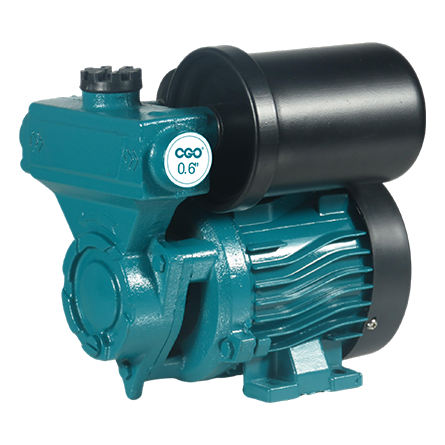
Comprehensive Guide to Selecting Self Priming Pumps
Choosing self priming pumps for an industrial, agricultural, or municipal project is rarely about hunting down the motor with the highest horsepower rating on a catalog page. Instead, success comes from matching the pump precisely to the physical environment where it will actually operate. As a pump-selection adviser, the same recurring issue appears across distributor inquiries and project bids: a buyer knows the target flow rate, but has failed to map out the suction line geometry, liquid characteristics, discharge head, or daily operating duty cycle. Those exact details determine whether a pump starts reliably every time and remains economical to run over its lifespan.
Self priming pumps prove exceptionally useful when equipment must sit comfortably above the liquid level and evacuate air from the suction line after the internal casing has been initially filled. They are widely specified for agricultural irrigation, wastewater transfer, dewatering, and general drainage duties where manual priming at every restart would introduce unacceptable downtime. However, achieving optimal performance still depends entirely on evaluating the complete piping system rather than relying on the general label of being self-priming.
Prioritizing the True Duty Point Over Brochure Claims
Before comparing various self priming pumps, buyers must document the required flow rate and total dynamic head under realistic operating conditions. Total head accounts for vertical elevation lift, friction losses across suction and discharge piping, elbows, valves, strainers, and any terminal pressure required at the outlet. A pump can appear completely adequate when calculating static elevation differences alone, only to fall short of the real duty point once pipe friction is factored into the equation.
It is always tempting to select the highest rated flow or head printed in a sales brochure. That approach is fundamentally flawed because those headline figures represent extreme endpoints on a performance curve rather than the actual operating conditions your facility will experience. Always request the manufacturer's official pump curve and locate your anticipated flow and head directly on it.
-
Flow Requirements: How many cubic meters per hour or liters per minute must reach the final delivery point?
-
Total Head: What is the precise sum of elevation gain plus calculated piping and equipment friction loss?
-
Run Profile: Will the unit operate continuously, run in short automatic cycles, or function only seasonally?
-
Future Allowances: Could an extra irrigation zone, longer hose layout, or higher tank increase the duty point later?
Evaluating Suction Limits and NPSH Requirements
The defining advantage of self priming pumps is their exceptional air-handling capability on the suction side following initial casing priming, but this feature does not exempt them from atmospheric and piping limitations. Technicians must measure the exact vertical distance from the lowest liquid level to the pump centerline, then evaluate the suction pipe length, diameter, bends, foot valves, and potential air-leak paths. Standard engineering references highlight practical suction lifts of roughly six to eight meters at sea level for typical self-priming configurations; altitude, elevated liquid temperatures, restrictive piping, and impeller design can reduce this usable value significantly.
| Evaluation Metric | Primary Consideration | Key Operational Impact |
| Suction Lift | Vertical height from liquid level to pump centerline | Dictates priming capability and cavitation risk |
| NPSH Margin | Available vs. required net positive suction head | Prevents internal vaporisation and impeller damage |
| Fluid Viscosity | Presence of solids, mud, or chemical content | Influences seal integrity and casing material |
| ISO Standards | Hydraulic performance acceptance testing | Guarantees manufactured output against curves |
Net Positive Suction Head (NPSH) deserves rigorous attention. The liquid arriving at the pump inlet must maintain adequate pressure margins to prevent vaporisation and unstable operation. Always request the pump's required NPSH value and verify that the system's available NPSH exceeds it comfortably at the intended duty point, incorporating an appropriate engineering safety margin.
Matching Materials and Mechanical Seals to Liquids
Not all water sources behave like clean, cool municipal water. Abrasive sand, suspended agricultural solids, fertilizer residues, corrosive chemicals, elevated temperatures, and fluid viscosity all dictate the correct choice of casing material, impeller design, mechanical seals, and suction strainers. Mechanical seal failures are frequently blamed on defective manufacturing, but they are more commonly the direct result of abrasive slurries, dry running, excessive suction vacuum, or operating far away from the intended Best Efficiency Point (BEP).
For every project, describe the pumped liquid in precise plain language and supply any available laboratory test results. Clean water, muddy irrigation runoff, raw sewage, or chemical-bearing solutions are never interchangeable. When suspended solids are present, clarify their approximate particle size and volumetric concentration so suppliers can configure the right internal clearances.
Emphasizing Global Manufacturing and Supply Support
For distributors and international project buyers sourcing equipment across cross-border supply chains, clear documentation and reliable manufacturing capabilities are paramount. Ensuring that equipment complies with recognized hydraulic standards—such as ISO 9906 for rotodynamic performance testing—provides complete confidence in manufactured output.
For organizations seeking robust pumping hardware, certified testing documentation, and responsive global logistics support, Flyaway delivers advanced self priming pumps engineered to meet rigorous international standards. By combining meticulous duty-point calculations with high-quality manufacturing, facility operators secure long-term reliability and operational efficiency.






