 EN
What Is a Water Pump Used For?
2026/10/17
Discover what a water pump is used for across homes, farms, and sites. Learn how Flyaway provides durable manufacturing and supply solutions.

2026/09/18
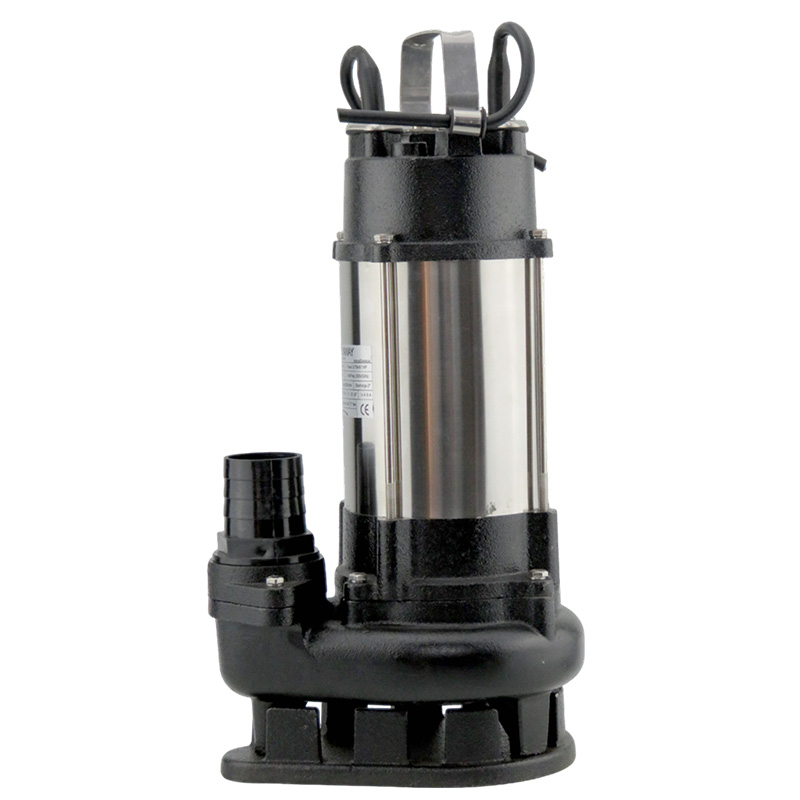
Selecting the proper submersible pump for residential, agricultural, or industrial fluid transfer applications requires a rigorous engineering evaluation of system requirements. Drawing from extensive practical field experience across municipal water supply networks, wastewater systems, and heavy fluid transfer projects, miscalculating flow rate and total dynamic head remains the primary cause of premature mechanical wear and excessive energy consumption. Professional engineers and system integrators must meticulously measure vertical geodetic elevation, pipeline friction losses across various pipe diameters, and required discharge pressure before consulting manufacturer performance curves. At Flyaway, our engineering team consistently emphasizes that matching the operating point precisely to the customized system curve ensures optimal hydraulic performance, peak efficiency, and long-term reliability without overloading the electric motor during peak demand periods. Furthermore, understanding the specific gravity and viscosity of the pumped medium guarantees that the selected submersible pump operates safely within hydraulic safety limits, preventing cavitation, impeller erosion, and unexpected operational failures in demanding field environments. Proper preliminary hydraulic analysis guarantees that your chosen submersible pump will deliver maximum discharge efficiency while minimizing lifetime energy expenditures.
Material selection is utterly critical when deploying pumping equipment in aggressive chemical processing, municipal wastewater, or marine environments where fluid reactivity rapidly degrades standard metallic components. While standard cast iron alternatives often degrade and pit rapidly when exposed to acidic fluids or saline solutions, premium high-grade stainless steel options provide exceptional, long-lasting resistance against electrochemical oxidation. Industry benchmarks such as AISI 304 and AISI 316 stainless steel offer distinct mechanical properties tailored for specific operating conditions, with grade 316 incorporating molybdenum to significantly enhance chloride pitting resistance. Furthermore, verifying chemical compatibility between the pumped fluid and your chosen alloy prevents catastrophic casing failures and costly environmental hazards while extending operational lifespan. When evaluating any corrosive application, selecting a corrosion-resistant submersible pump safeguards long-term capital investments, minimizes maintenance intervals, and ensures continuous fluid handling performance across severe industrial and municipal operating conditions. Every high-performance submersible pump relies heavily on superior metallurgy to withstand hostile chemical environments without structural compromise.
When executing a precise submersible pump selection process for deep wells and narrow boreholes, physical dimensions and well casing standards dictate equipment feasibility. For instance, specialized stainless steel deep well lines like the 2/2.5SDm series are engineered for narrow-bore installations where standard 3-inch and 4-inch units cannot fit, accommodating minimum well diameters of 2 inches and 2.5 inches respectively. These models combine compact stainless steel construction with multistage head capabilities, achieving immersion depths up to 80 meters for continuous borehole extraction. Conversely, progressive cavity screw designs such as the 4QGD series efficiently generate high heads up to 150 meters at relatively low flow rates, utilizing AISI 304 stainless steel wetted components to deliver steady, pulse-free water output for remote properties and agricultural irrigation. Mastering the intricacies of submersible pump selection allows technicians to optimize hydraulic efficiency, eliminate mechanical binding risks, and ensure reliable water extraction in restricted-diameter geological formations. Proper submersible pump selection remains the cornerstone of successful deep-well groundwater extraction projects worldwide.
The overall reliability and operational safety of any submerged installation depend heavily on internal motor design, winding insulation class, and robust thermal overload protection mechanisms. Because submersible motors operate entirely underwater under high hydrostatic pressure, meticulous sealing mechanisms such as tandem mechanical seals, tungsten carbide faces, and specialized non-toxic oil chambers are required to prevent moisture ingress and winding short circuits. When sizing your equipment, reviewing electrical parameters including voltage tolerances, phase requirements, frequency variations, and NEMA or IEC motor standards is vital for regulatory compliance. Practical field audits show that integrating advanced control panels equipped with phase-failure protection, earth-leakage circuit breakers, and embedded winding temperature sensors effectively safeguards the motor against voltage spikes and dry-running thermal damage. Additionally, ensuring proper electrical earthing and cable sizing for every submersible pump installation eliminates voltage drop issues and prevents catastrophic electrical failures during continuous heavy-duty operation. Advanced electrical protection safeguards each operational submersible pump against unexpected grid fluctuations and thermal overload events.
Implementing a reliable submersible pump guide methodology also involves balancing operational expenses and evaluating alternative energy configurations, such as DC solar submersible systems. Solar-powered brushless motor ranges eliminate conventional fossil fuel or grid electricity costs, achieving a return on investment within one to two years while complying with environmental sustainability objectives. To maximize the operational lifespan of any drainage or deep-well unit, establishing a proactive maintenance routine is indispensable. Routine inspection of mechanical seals, impeller wear, and electrical insulation resistance ensures continuous operational uptime, prevents costly facility downtime, and protects capital assets from severe water damage across demanding industrial, agricultural, and municipal environments. By strictly adhering to every recommendation outlined within this comprehensive submersible pump guide, facility managers and system designers can achieve maximum energy efficiency, lower maintenance overhead, and ensure dependable, long-term fluid transfer performance under all operating conditions. Utilizing a professional submersible pump guide ensures lasting success across every installation phase.

2026/10/17
Discover what a water pump is used for across homes, farms, and sites. Learn how Flyaway provides durable manufacturing and supply solutions.

2026/10/17
Discover why knowing the correct pump size protects budgets and ensures system efficiency. Learn sizing steps and Flyaway pump solutions.

2026/10/17
Discover how to choose the right farm water pump. Learn about head, flow, solar options, and reliable pump solutions by Flyaway.

2026/10/17
Discover how a small self priming water pump can simplify home water transfer, plus key installation and sizing checks.

2026/10/17
Learn how to choose a booster pump by evaluating flow, head, curves, and controls. Discover reliable pump solutions built by Flyaway.

2026/10/17
Learn the core benefits of a self priming well pump for shallow wells. Discover selection tips, operation limits, and how Flyaway delivers quality pumps.
