
 EN
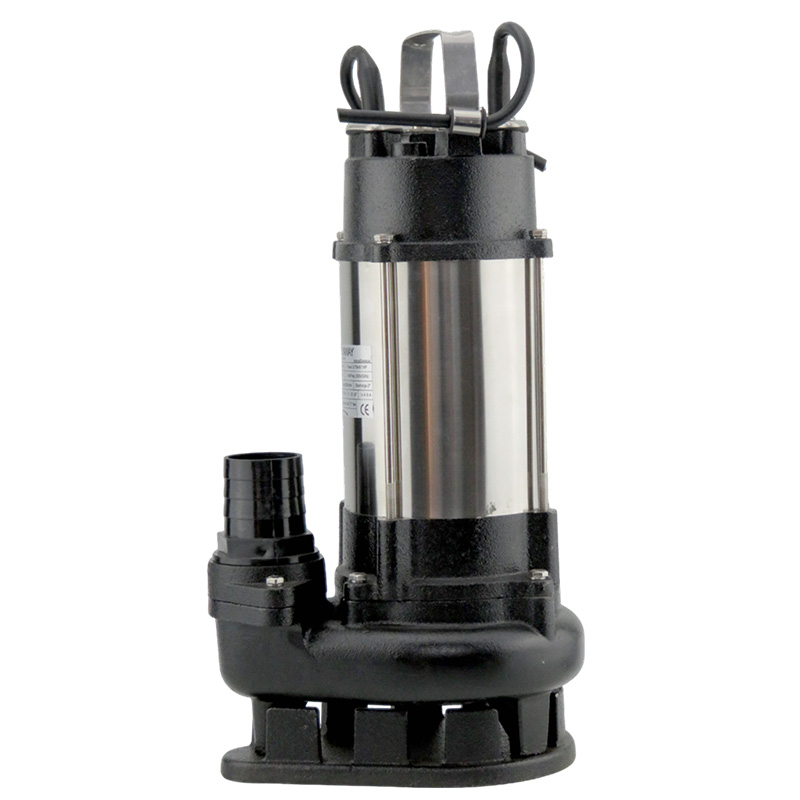
Optimizing Deep Well Pump Applications for Modern Farms
Turning a dependable groundwater source into a high-performing farm water system is a complex engineering task that goes far beyond simply dropping a submersible unit down a borehole. A deep well pump performs reliably only when the pump mechanics, well casing, distribution piping, storage tanks, and end-use requirements are meticulously planned together. For agricultural project procurement, the central question is never which equipment catalog lists the highest head number. Instead, the ultimate test is whether the complete groundwater system can deliver the required water volume at the precise pressure needed during the hottest, busiest weeks of the growing season.
Groundwater plays a foundational role in global agricultural planning and food security. National agricultural surveys consistently reveal that irrigation accounts for nearly half of total freshwater withdrawals, with groundwater supplying more than half of all applied irrigation water. While national statistics provide valuable macro-level context, they do not serve as a sizing rule for an individual farm. Every well-pump installation decision must start directly with local well drilling logs, aquifer recharge data, and the specific daily water schedule of the property.
Identifying Where Deep Well Pumps Excel on Farms
A properly specified deep well pump is indispensable whenever surface water sources are unavailable, unreliable, situated too far from the fields, or chemically unsuitable for agricultural operations. Submersible configurations represent the gold standard for deep boreholes because the pump operates entirely below the water level, pushing water upward efficiently rather than trying to pull it via suction. The correct system arrangement depends heavily on well construction dimensions, pumping water levels, available electrical power, water chemistry, and peak demand profiles.
For field crop irrigation, a well-pump setup can feed a main irrigation line directly, fill a large storage reservoir for later distribution, or supply a pressure-boosted zone network. Drip irrigation, overhead sprinklers, traveling hose reels, and flood distribution have vastly different flow and pressure requirements. Before selecting a deep well pump, farm managers must list which zones operate simultaneously, calculate required flow rates, account for elevation gains, and determine exact pressure needs at the farthest field edge.
Tailoring Water Systems for Livestock and Protected Growing
Beyond broad-acre field irrigation, agricultural groundwater systems must also serve animal drinking troughs, livestock barns, equipment washdown pads, and centralized storage tanks. These domestic and utility uses typically feature lower average flow rates than large-scale irrigation yet demand absolute pressure reliability at strict operating times. Incorporating a pressurized pressure tank can smooth out pump cycling, whereas direct pressure-control systems suit high-demand washdown points. When well water serves livestock or farmworkers, comprehensive water-quality testing and filtration must be integrated into the design.
| Application Sector | Primary Operational Focus | Key Engineering Priority |
| Field Crop Irrigation | High-volume seasonal water delivery | Managing total dynamic head and pipe friction |
| Livestock & Barns | Continuous reliability and hygiene | Stable pressure and dependable pressure tanks |
| Greenhouses & Nurseries | Precision misting and fertigation | Fine filtration and mineral scaling prevention |
| Storage & Transfer | Buffer management and peak shaving | Separating well yield from instantaneous demand |
Greenhouses, nurseries, and protected growing facilities demand exceptional pressure predictability for micro-sprinklers, root-zone fertigation, and high-pressure misting lines. Because fine emitters clog easily from suspended debris or mineral scale precipitation, water analysis and advanced filtration equipment belong in the primary procurement brief rather than being treated as afterthought accessories.
Starting With the Well Source and Sustainable Yield
Before purchasing any pumping hardware, technicians must collect the official driller’s log or current well testing records. It is vital to confirm bore diameter, total depth, static water level, pumping water level, tested aquifer yield, casing integrity, and initial water quality observations. The pump intake must be positioned safely below the active pumping water level and comfortably above the bottom of the well to prevent sediment ingestion.
Well yield represents the most critical parameter in agricultural engineering. A pump oversized beyond the sustainable yield of the aquifer will quickly draw down the water table, trip electronic dry-run protections, pull abrasive sand into the impeller, or leave distant irrigation zones completely starved of water. This is precisely why system-level thinking matters: ultimate performance relies on aquifer recovery rates, distribution pipe sizing, and strategic storage capacity.
Calculating Total Dynamic Head Accurately
Total dynamic head (TDH) serves as the indispensable mathematical foundation for choosing any deep well pump. TDH encompasses the vertical lift from the active pumping water level, the pressure required at the delivery point, and all friction losses encountered along pipes, elbows, filters, check valves, and treatment skids.
-
Define Demand: State required flow rates in consistent units for every active irrigation zone or livestock fill point.
-
Measure Lift: Base vertical calculations on expected pumping water levels during peak operation, not static resting levels.
-
Add Delivery Pressure: Account for the exact operating pressure demanded by sprinkler heads, drip regulators, or filtration media.
-
Account for Friction: Factor in long pipe runs, undersized fittings, and partially restricted valves that increase system resistance.
A manufacturer performance curve cannot replace careful site engineering, but it translates complex hydraulics into concrete choices. Facility buyers should ask suppliers to map out expected operating points and explain how system performance shifts if an extra irrigation zone opens or if the water table drops during a dry summer. For operations seeking durable agricultural pumping equipment and comprehensive supply chain support, Flyaway delivers advanced deep well pump solutions engineered to meet rigorous global standards.






