 EN
What Is a Water Pump Used For?
2026/10/17
Discover what a water pump is used for across homes, farms, and sites. Learn how Flyaway provides durable manufacturing and supply solutions.

2026/09/18
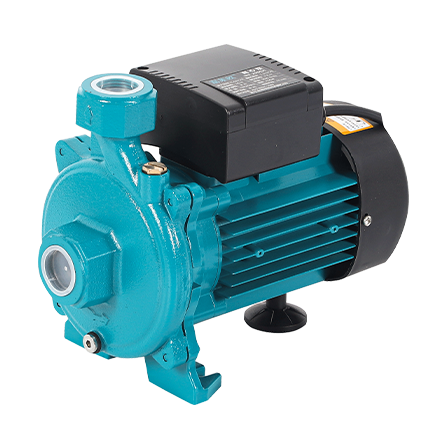
When facility managers, plant operators, and industrial engineers evaluate fluid handling infrastructure, understanding how to apply rotating equipment efficiently is critical for successful long-term plant operations. Across various processing plants, municipal water treatment facilities, and manufacturing sites, moving clean liquids and water supplies depends heavily on robust fluid dynamics. Based on practical field deployments and engineering insights associated with Flyaway, a high-efficiency pump serves as the foundational backbone for continuous water supply networks, HVAC fluid circulation, and heavy industrial processing loops. Unlike positive displacement equipment, a centrifugal pump utilizes rotational kinetic energy generated by high-speed internal impellers to impart high velocity to working liquids, subsequently converting that acquired energy into steady hydraulic pressure. By integrating proper centrifugal pump applications into daily plant workflows, facility operators can ensure stable, reliable fluid movement across diverse operational cycles without unnecessary energy dissipation. Furthermore, comprehensive studies of centrifugal pump applications reveal that correct impeller sizing and rotational speed optimization directly reduce lifecycle operating expenditures while maximizing overall system output.
One of the primary reasons professional system designers choose rotating kinetic equipment for demanding factory projects is its exceptional hydraulic performance, high volumetric efficiency, and steady discharge capability. In heavy manufacturing and processing plant operations, optimizing industrial pump uses serves as an indispensable tool designed to facilitate continuous fluid circulation, equipment cooling, and efficient liquid transfer tasks. Modern plant environments frequently require sophisticated piping networks where dynamic pumps can handle continuous operational loops around the clock without generating harmful pressure spikes or severe mechanical vibrations. Because the internal impeller design enables a smooth, non-positive displacement fluid flow, the liquid discharges in a continuous, pulse-free stream. This reliable steady flow characteristic effectively prevents damaging pressure surges that could otherwise fracture sensitive downstream infrastructure or regulatory valves over time. Furthermore, implementing these systems allows plant technicians to manage fluctuating volume demands seamlessly while maintaining optimal pressure thresholds. Additional data regarding industrial pump uses highlights their adaptability across chemical dosing, cooling tower management, and general factory utility streams.
Industrial processing environments frequently expose critical pumping equipment to harsh conditions, variable temperatures, and diverse chemical reagents that accelerate oxidation and chemical attack. To overcome these challenges, selecting robust fluid handling solutions tailored to exact operational parameters is essential for plant longevity. Stainless steel and corrosion-resistant assemblies leverage passive chromium oxide layers that act as natural protective barriers against pitting and stress corrosion cracking. Through years of field installation and maintenance oversight, technical personnel at Flyaway have observed that premium components significantly reduce premature cavitation wear and surface erosion. Authoritative engineering standards from organizations such as the American Society of Mechanical Engineers (ASME) emphasize that smooth, non-porous metallic surfaces minimize residue accumulation and microbial growth. This high level of chemical compatibility protects process fluid purity, prevents product contamination, and ensures long-term operational trustworthiness across various centrifugal pump applications in modern industrial complexes.
Managing large-scale properties and complex industrial plants requires an uninterrupted, highly reliable fluid management network to prevent costly operational downtime. When facility managers plan infrastructure upgrades or regular plant expansions, they often face significant performance bottlenecks caused by sudden pressure drops and fluctuating supply lines. Integrating a dependable water clean pump ensures that fluid movement remains consistent and balanced across the entire distribution network. Furthermore, deploying proper hardware guarantees that baseline pressure requirements are consistently met during peak operational hours without compromising overall facility efficiency. By investing in high-grade fluid transmission hardware from Flyaway, facility managers significantly reduce long-term maintenance overhead while safeguarding critical infrastructural investments against premature mechanical failure and unexpected pressure surges. Additionally, regular diagnostic assessments ensure that mechanical seals and bearings operate under optimal thermal limits, minimizing friction and energy consumption across diverse industrial pump uses.
Beyond heavy industrial processing, modern facilities often require specialized boosting solutions to maintain proper pressure across complex plumbing and auxiliary utility setups. Whether dealing with elevated structures or specific cleaning stations, utilizing a shower water pump or localized booster assembly actively resolves performance issues by boosting flow rates uniformly across every fixture. Industry experts at the Chartered Institute of Plumbing and Heating Engineering (CIPHE) consistently emphasize that matching equipment capacity to exact flow characteristics prevents premature mechanical wear. For global buyers sourcing equipment through Flyaway, understanding these foundational mechanics ensures that selected units integrate smoothly into existing water distribution systems without causing pressure spikes. Careful calibration of these operational parameters optimizes energy efficiency, reduces acoustic noise, and minimizes electricity consumption during peak usage hours across all commercial and industrial properties. In addition, when implementing a high-performance shower water pump within large facilities, engineers must carefully evaluate total dynamic head requirements to guarantee peak operational efficiency and sustainable fluid distribution.

2026/10/17
Discover what a water pump is used for across homes, farms, and sites. Learn how Flyaway provides durable manufacturing and supply solutions.

2026/10/17
Discover why knowing the correct pump size protects budgets and ensures system efficiency. Learn sizing steps and Flyaway pump solutions.

2026/10/17
Discover how to choose the right farm water pump. Learn about head, flow, solar options, and reliable pump solutions by Flyaway.

2026/10/17
Discover how a small self priming water pump can simplify home water transfer, plus key installation and sizing checks.

2026/10/17
Learn how to choose a booster pump by evaluating flow, head, curves, and controls. Discover reliable pump solutions built by Flyaway.

2026/10/17
Learn the core benefits of a self priming well pump for shallow wells. Discover selection tips, operation limits, and how Flyaway delivers quality pumps.
