
 EN
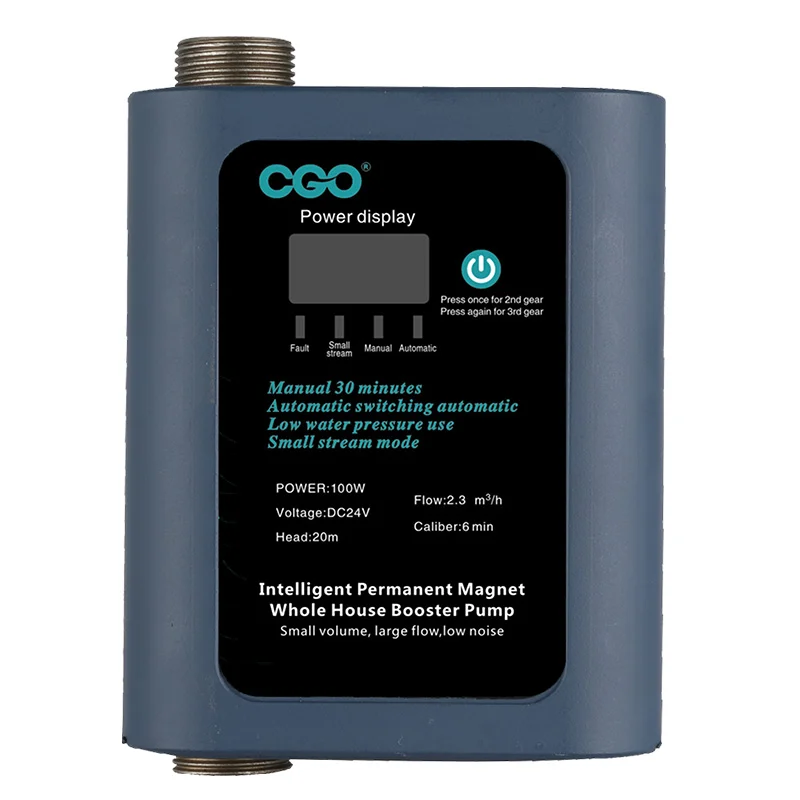
Mastering Residential Water Pressure with Booster Pump Systems
Weak flow at the showerhead, agonizingly slow washing machine cycles, and limp garden hoses turn simple daily tasks into frustrating chores. When the municipal line or storage cistern delivers clean water but lacks the mechanical thrust to reach upper floors, adding a booster pump solves the bottleneck. Getting reliable water delivery requires accurate hydraulic sizing rather than guessing motor horsepower. Proper system selection hinges on plumbing resistance, simultaneous fixture demand, and motor control logic.
Diagnosing Household Pressure Bottlenecks
Plumbing circuits hide true operating conditions until faucets actually open. Static pressure measured on closed piping can easily deceive homeowners. A pressure gauge may display an acceptable reading while taps remain off, only to drop sharply the second two fixtures open together. A wide gap between static pressure and running dynamic pressure indicates localized piping friction, obstructed filter screens, or undersized risers rather than an inadequate pump.
Before installing a water pressure booster, check the municipal meter, pressure-reducing valves, and main gate valves. If neighboring houses share identical weak flow, low utility line pressure serves as the root cause. If low pressure occurs exclusively in top-floor en-suite bathrooms, elevation lift and piping friction demand mechanical intervention.
Diagnostic Check
Observed Field Condition
Probable Cause and Solution
Static vs Dynamic Pressure
Acceptable static level with severe drop when taps open
Clogged sediment filter or partially closed main shut-off valve
Neighborhood Inflow Check
Weak pressure across all adjacent properties
Municipal main undersizing requiring dedicated booster pump addition
Multi-Floor Flow Balance
Strong basement flow but weak upper-story flow
Elevation head loss requiring booster pump sized for vertical lift
Temporal Fluctuation Check
Pressure drops only during early morning hours
Municipal grid saturation during peak regional demand hours
| Diagnostic Check | Observed Field Condition | Probable Cause and Solution |
|---|---|---|
| Static vs Dynamic Pressure | Acceptable static level with severe drop when taps open | Clogged sediment filter or partially closed main shut-off valve |
| Neighborhood Inflow Check | Weak pressure across all adjacent properties | Municipal main undersizing requiring dedicated booster pump addition |
| Multi-Floor Flow Balance | Strong basement flow but weak upper-story flow | Elevation head loss requiring booster pump sized for vertical lift |
| Temporal Fluctuation Check | Pressure drops only during early morning hours | Municipal grid saturation during peak regional demand hours |
Core Engineering Inputs for Sizing Water Systems
Specifying a residential booster pump requires three interrelated engineering calculations: suction pressure, elevation head, and concurrent flow volume. Installing an undersized home booster pump forces the motor to operate near continuous thermal overload, while massive oversizing induces short-cycling, creates mechanical pipe stress, and drives up electricity costs.
Engineers establish total dynamic head by adding vertical rise to friction losses through pipe runs, valves, and water heaters. Every elbow, tee, and fitting increases hydraulic drag. In addition, peak flow calculations must accommodate simultaneous fixture operation. A standard morning routine involves running showers alongside refilling toilets and running appliances. The selected booster pump must sustain reliable output during peak household demand.
Fixture Category
Standard Flow Demand
Hydraulic Design Consideration
Modern Low-Flow Shower
1.8 to 2.5 Gallons Per Minute
Demands stable dynamic pressure between 40 and 50 PSI
High-Efficiency Toilet
1.6 to 3.0 Gallons Per Minute
Requires rapid cistern recharge without starving active showers
Automatic Washing Machine
3.0 to 5.0 Gallons Per Minute
High-speed solenoid valves require rapid pump pressure recovery
Outdoor Garden Sprinkler
5.0 to 8.0 Gallons Per Minute
Continuous high-volume draw requiring robust motor thermal protection
| Fixture Category | Standard Flow Demand | Hydraulic Design Consideration |
|---|---|---|
| Modern Low-Flow Shower | 1.8 to 2.5 Gallons Per Minute | Demands stable dynamic pressure between 40 and 50 PSI |
| High-Efficiency Toilet | 1.6 to 3.0 Gallons Per Minute | Requires rapid cistern recharge without starving active showers |
| Automatic Washing Machine | 3.0 to 5.0 Gallons Per Minute | High-speed solenoid valves require rapid pump pressure recovery |
| Outdoor Garden Sprinkler | 5.0 to 8.0 Gallons Per Minute | Continuous high-volume draw requiring robust motor thermal protection |
Comparing Pressure Control Technologies
Marrying the mechanical pump wet end with the appropriate electronic control determines system longevity, noise levels, and power efficiency. Residential booster pump applications employ three primary drive configurations.
Traditional pressure switches use mechanical spring diaphragms to cycle the motor based on predetermined cut-in and cut-out thresholds. These configurations demand an expansion bladder tank to cushion pressure spikes and prevent rapid cycling. Electronic flow switches track fluid movement directly, keeping the motor engaged while water moves and shutting off when faucets close. Modern variable speed drive systems continuously modulate motor rotation based on real-time demand, maintaining steady pressure across varying fixture use.
Controller Mechanism
Operational Behavior
Practical System Application
Mechanical Pressure Switch
Simple cut-in and cut-out switching paired with an expansion tank
Rural well systems, transfer setups, and budget residential retrofits
Electronic Flow Controller
Flow-sensing operation with integrated run-dry protection circuitry
Compact direct-boost plumbing systems with steady operational flow
Variable Speed Drive Inverter
Real-time motor speed modulation delivering constant system pressure
Luxury residences, multi-bathroom homes, and high-efficiency buildings
| Controller Mechanism | Operational Behavior | Practical System Application |
|---|---|---|
| Mechanical Pressure Switch | Simple cut-in and cut-out switching paired with an expansion tank | Rural well systems, transfer setups, and budget residential retrofits |
| Electronic Flow Controller | Flow-sensing operation with integrated run-dry protection circuitry | Compact direct-boost plumbing systems with steady operational flow |
| Variable Speed Drive Inverter | Real-time motor speed modulation delivering constant system pressure | Luxury residences, multi-bathroom homes, and high-efficiency buildings |
Critical Installation Guidelines for Reliability
Mechanical installation quality directly impacts equipment longevity. Bolting a high-output booster pump straight onto timber subflooring creates acoustic resonance that echoes across building walls. Flexible braided stainless connectors installed at the inlet and discharge ports isolate mechanical vibration and relieve physical stress on rigid copper or PEX connections.
Intake pipe diameter requires careful attention. Restricting suction line sizing below the pump inlet port induces fluid turbulence and dangerous cavitation, which pits impellers and ruins shaft seals. Placing cleanable strainers upstream shields internal diffusers from welding slag and loose grit. In municipal connections, certified double-check backflow preventers ensure pressurized domestic water never migrates backward into public utility distribution mains.
Installation Detail
Recommended Technical Parameter
Operational Risk Prevented
Suction Line Geometry
Diameter matching or exceeding pump inlet port
Fluid turbulence, intake starvation, and impeller cavitation
Mechanical Connections
Flexible stainless braided couplings with isolation valves
Pipe strain, mechanical distortion, and sound transmission
Electrical Connection
Dedicated grounded circuit with thermal overload trip
Voltage drop, motor winding damage, and erratic controller resets
Fluid Protection Valves
Dual-check backflow preventer and downstream check valve
Municipal water contamination and backflow pressure shocks
| Installation Detail | Recommended Technical Parameter | Operational Risk Prevented |
|---|---|---|
| Suction Line Geometry | Diameter matching or exceeding pump inlet port | Fluid turbulence, intake starvation, and impeller cavitation |
| Mechanical Connections | Flexible stainless braided couplings with isolation valves | Pipe strain, mechanical distortion, and sound transmission |
| Electrical Connection | Dedicated grounded circuit with thermal overload trip | Voltage drop, motor winding damage, and erratic controller resets |
| Fluid Protection Valves | Dual-check backflow preventer and downstream check valve | Municipal water contamination and backflow pressure shocks |
Preventive Maintenance and Inspection Practices
Preventive maintenance safeguards operating efficiency and prevents seal failures. Inspect mechanical shaft seals and casing joints quarterly for signs of seepage or mineral crusting. Clean intake strainers regularly to maintain smooth inlet flow.
Systems with bladder expansion tanks require periodic pre-charge checks. Disconnect electrical power, isolate the supply, open a tap to depressurize the chamber, and verify air pressure using a pressure gauge. Maintaining the air pre-charge roughly two PSI below the pump cut-in setpoint prevents bladder fatigue, protects the motor against frequent starts, and preserves overall system performance.
Inspection Task
Recommended Frequency
Key Maintenance Objective
Mechanical Seal Audit
Quarterly visual inspection
Identify minor weeping before moisture penetrates motor bearings
Strainer Mesh Cleaning
Bi-annual service
Clear scale and debris to preserve pump inlet velocity
Bladder Tank Air Pre-Charge
Bi-annual pressure verification
Prevent bladder failure and eliminate rapid motor cycling
Operating Current Audit
Annual electrical check
Detect motor winding resistance drift and mechanical drag
| Inspection Task | Recommended Frequency | Key Maintenance Objective |
|---|---|---|
| Mechanical Seal Audit | Quarterly visual inspection | Identify minor weeping before moisture penetrates motor bearings |
| Strainer Mesh Cleaning | Bi-annual service | Clear scale and debris to preserve pump inlet velocity |
| Bladder Tank Air Pre-Charge | Bi-annual pressure verification | Prevent bladder failure and eliminate rapid motor cycling |
| Operating Current Audit | Annual electrical check | Detect motor winding resistance drift and mechanical drag |
Sourcing Precision Engineering and Manufacturing
Developing resilient fluid delivery systems demands precision machining, durable motor windings, and strict quality control. Specialized pump manufacturers like Flyaway deliver fluid management solutions built for global distribution standards. Backed by automated manufacturing facilities and advanced laboratory testing, Flyaway designs high-performance booster pump assemblies, robust induction motors, smart digital controllers, and corrosion-resistant hydraulic casings.
For international distributors, commercial contractors, and system integrators seeking dependable OEM and ODM supply chain partnerships, Flyaway provides tailored engineering support. From precision tooling and hydraulic optimization to custom private-label packaging, Flyaway aligns modern manufacturing capabilities with the demanding performance requirements of global residential markets.






