
 EN
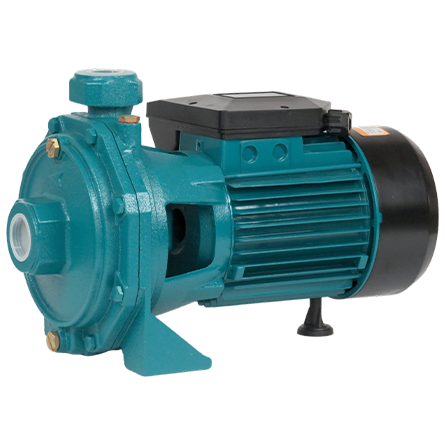
Small Centrifugal Pump Selection for Facilities
Industrial facilities and commercial buildings operate under constant spatial constraints. Mechanical rooms, HVAC auxiliary loops, chiller plants, and automated washdown stations require compact fluid handling without sacrificing hydraulic reliability. In modern maintenance workflows, selecting an oversized pump and throttling the discharge valve wastes electrical energy and accelerates mechanical wear. A well-engineered small centrifugal pump solves this challenge by delivering localized fluid circulation, straightforward serviceability, and tight footprint management. Evaluating a small centrifugal pump requires looking beyond catalog dimensions to verify operating duty points, net positive suction head margins, and long-term fluid compatibility.
-
Interconnected Hydraulic Dynamics: Suction line geometry, fluid viscosity, and dynamic head govern mechanical seal longevity.
-
Progressive Thermal Dissipation: Compact rotating assemblies dissipate frictional heat effectively when operating within design velocity limits.
-
Structural Footprint Efficiency: Close-coupled arrangements eliminate external frame alignments, preventing baseplate distortion and shaft deflection.
-
Targeted Flow Distribution: Delivering designated volumetric flow to secondary zones avoids the operating penalties of throttled bypass systems.
Maximizing Usable Real Estate in Modern Facility Rooms
Mechanical rooms, water-treatment skids, and process support stations constantly compete for valuable floor area. Installing a close-coupled or monoblock small centrifugal pump reduces the overall footprint of the rotating assembly, motor frame, and baseplate. This compact footprint preserves essential clearance for isolation valves, line strainers, pressure gauges, and electrical disconnect boxes.
-
Streamlined Equipment Layouts: Eliminating bulky frame-mounted couplings leaves more physical clearance for technicians to perform daily inspections safely.
-
Simplified Replacement Schedules: Compact assemblies allow maintenance crews to swap motors or mechanical seals without dismantling adjacent pipe headers.
-
Vibration Isolation Advantages: Lighter structural packages transmit less dynamic resonance into facility floors when mounted on standard elastomeric pads.
-
Localized Skid Integration: Integrating a compact water pump directly into modular chemical dosing or boiler-feed skids minimizes external field piping.
A smaller equipment footprint should never compromise physical service access. Maintenance personnel must still maintain clear radial clearance around the motor fan cowl and seal gland to execute routine inspections smoothly and apply essential pump maintenance tips without hindrance.
Core Operational Advantages for Localized Fluid Loops
A small centrifugal pump excels across dedicated fluid loops where centralized systems prove inefficient or excessively complex. Throttling large distribution pumps to satisfy a low-flow secondary branch burns excessive kilowatt-hours and drives radial shaft deflection. Deploying a dedicated compact water pump aligns hydraulic output directly with system demand.
| Operational Factor | Dedicated Compact Unit | Throttled Centralized System |
|---|---|---|
| Energy Efficiency | Operates near Best Efficiency Point (BEP) | High throttling losses across control valves |
| Mechanical Wear | Low radial thrust on shaft and bearings | High internal recirculation and bearing fatigue |
| Thermal Stability | Steady heat dissipation in clean fluid flow | Heat buildup behind closed discharge valves |
| Installation Space | Mounts cleanly on modular wall skids or pads | Requires large footprint and rigid floor foundations |
| Maintenance Scope | Rapid cartridge seal and impeller service | Complex crane rigging and line depressurization |
Straightforward mechanical architecture ensures that facilities teams manage everyday repairs without specialized contractor calls. Integrating proven pump maintenance tips into weekly routines keeps compact assemblies running smoothly for years.
Hydraulic Sizing Beyond Nameplate Ratings
Successful centrifugal pump selection demands rigorous calculation of total dynamic head (TDH) and required flow rate rather than guessing from motor horsepower. A pump curve illustrates the relationship between discharge pressure and volume flow for a specific impeller diameter and shaft speed. Engineering teams must calculate static lift, friction losses across valves and fittings, and pressure drops through heat exchangers or bag filters.
-
Total Dynamic Head Calculation: Combine static elevation changes with dynamic friction losses to plot an accurate system curve.
-
Avoiding Excessive Safety Margins: Sizing an impeller with an arbitrary safety margin pushes the small centrifugal pump toward run-out conditions or excessive shutoff pressure.
-
Duty Point Verification: Ensure that continuous operation lands between 70% and 110% of the pump Best Efficiency Point to minimize hydraulic shock.
-
Motor Load Balancing: Verify that operating horsepower across peak system flow does not exceed the motor nameplate service factor.
Thorough centrifugal pump selection avoids the common pitfall of oversized motors cycling erratically under partial loads. Running a small centrifugal pump near its hydraulic sweet spot reduces power consumption while safeguarding mechanical seals against premature thermal distress.
Preventing Suction Cavitation and Fluid Degradation
Suction conditions represent the single most vulnerable link in any centrifugal pumping circuit. Cavitation occurs when suction pressure drops below the fluid vapor pressure, generating microscopic vapor bubbles that collapse against the impeller vanes with destructive force. Ensuring that Net Positive Suction Head Available (NPSHa) exceeds Net Positive Suction Head Required (NPSHr) by a safe engineering margin prevents pitting, noise, and rapid seal destruction.
| Field Risk Area | Observable Physical Symptom | Preventive Engineering Practice |
|---|---|---|
| Suction Line Restriction | Popping sounds resembling gravel in the casing | Keep suction piping short, straight, and one pipe size larger |
| Fluid Vaporization | Fluctuation in discharge pressure gauges | Monitor liquid operating temperatures and reservoir head |
| Abrasive Fluid Wear | Rapid seal face grooving and casing thinning | Upgrade wetted components to hardened alloys or stainless steel |
| Mechanical Seal Dry Run | Squealing noise and sudden face cracking | Install flow switches and automatic dry-run cutouts |
Selecting proper wetted metallurgy and seal materials protects the compact water pump against aggressive plant liquids. Standard cast iron casings and Buna-N elastomers perform reliably in clean water loops, whereas chemical wastewater or glycol cooling solutions demand AISI 304 or 316 stainless steel with silicon carbide mechanical seals. Applying timely pump maintenance tips prevents minor suction leaks from turning into major downtime.
Pre-Procurement Technical Checklist for Facilities
Before issuing procurement contracts for a compact water pump, facility engineers should complete a rigorous technical audit. Reviewing operating parameters against certified factory curves eliminates mismatch errors prior to installation.
| Verification Parameter | Technical Requirement Standard | Engineering Objective |
|---|---|---|
| Process Flow and Head | Verify operating point against certified curve | Prevent hydraulic surge and excessive throttling |
| Suction Margin | Maintain minimum 0.5 to 1.0 m NPSH margin | Eliminate cavitation erosion on impeller vanes |
| Electrical Integration | Check voltage, phase, IP enclosure rating | Ensure motor protection and inverter compatibility |
| Maintenance Clearances | Provide adequate perimeter around motor and seal | Facilitate rapid inspection and component replacement |
| Material Specifications | Match casing and elastomeric seals to fluid | Prevent premature chemical corrosion and leaching |
Diligent centrifugal pump selection protects facility budgets and reduces long-term maintenance intervention. Documenting performance curves and spare parts references ensures that field technicians carry out routine pump maintenance tips without guesswork.
Precision Manufacturing and Global Supply Support
Dependable industrial performance relies on precision manufacturing, strict dynamic balancing, and thorough hydrostatic testing. Flyaway manufactures and supplies a comprehensive portfolio of high-efficiency fluid handling equipment, commercial booster systems, and small centrifugal pump configurations tailored for demanding international installations.
Operating advanced multi-axis CNC machining centers, automated motor stator production lines, and computerized flow testing loops, Flyaway subjects every pumping unit to rigorous electrical load and pressure containment validation prior to export delivery. Strict adherence to ISO 9001 and CE manufacturing standards ensures operational reliability across commercial HVAC, industrial water treatment, and municipal building services.
For international distributors, engineering contractors, and plant facilities teams, Flyaway delivers robust OEM and ODM manufacturing partnerships:
-
Custom Impeller Trimming: Precision diameter machining to match unique system heads and maximize electrical efficiency.
-
Specialized Metallurgy: High-grade cast iron, bronze, AISI 304, and AISI 316 stainless steel wet ends engineered for abrasive or corrosive media.
-
Private-Label Solutions: Customized casing casting marks, specific powder-coat colors, and international export crating.
-
Reliable Logistics Integration: Containerized freight consolidation with predictable factory lead times to support wholesale supply chains.
Integrating precision engineering with responsive supply chain services, Flyaway provides dependable pumping machinery that streamlines everyday facility operations, reinforces centrifugal pump selection confidence, and ensures reliable fluid handling uptime.






