 EN
What Is a Water Pump Used For?
2026/10/17
Discover what a water pump is used for across homes, farms, and sites. Learn how Flyaway provides durable manufacturing and supply solutions.

2026/09/12
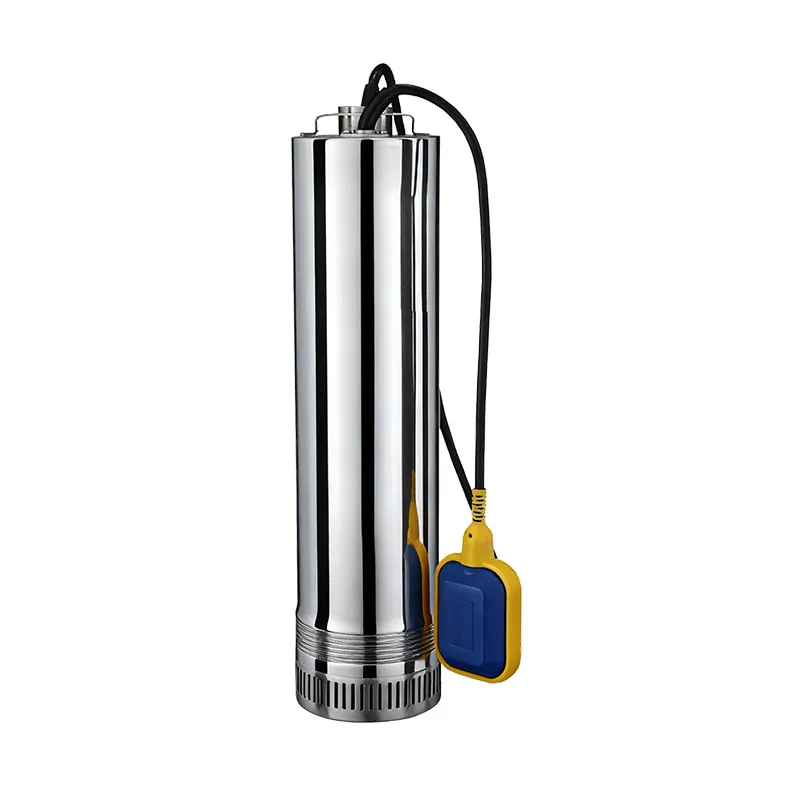
When residential property owners, commercial agricultural managers, and municipal utility planners search for dependable subterranean water extraction options, deploying a high-efficiency deep well pump is universally recognized as the most practical engineering solution for accessing deep aquifers. Unlike standard surface-mounted centrifugal equipment that constantly struggles against severe suction limits and cavitation risks, a properly specified deep well pump is specifically engineered to be lowered directly into deep boreholes, operating entirely underwater to push massive volumes of water upward against significant vertical head elevation. At Flyaway, our professional technical engineering team emphasizes that thoroughly understanding the fundamental hydraulic principles governing a deep well pump—such as static water levels, total dynamic head calculations, and precise flow rate requirements—ensures that every operational installation of a deep well pump delivers reliable water extraction without premature mechanical wear or efficiency loss. According to established industry guidelines from senior hydraulic engineers, selecting a properly sized deep well pump prevents destructive cavitation, eliminates excessive thermal motor strain, and guarantees a steady, unfluctuating water supply for residential drinking, large-scale agricultural irrigation, and light commercial manufacturing applications using a reliable deep well pump.
Deploying a reliable and robust deep well pump offers substantial, quantifiable operational advantages, particularly in terms of consistent pressure delivery and high volumetric efficiency across highly diverse field conditions. For intensive agricultural operations and remote rural homes, maintaining an uninterrupted, high-pressure water supply powered by a deep well pump is absolutely critical for daily productivity, crop health, livestock management, and general domestic sanitation. Advanced submersible models of a deep well pump are specifically designed to handle rigorous clean water requirements while operating silently beneath the surface, completely eliminating the priming hassles, mechanical noise, and air-lock vulnerabilities associated with above-ground pumping alternatives. Comprehensive field data clearly indicates that utilizing durable stainless steel construction and precision-engineered hydraulic impellers allows each deep well pump system to endure harsh operating environments and high-pressure demands over extended multi-year service cycles. By integrating robust electrical overload protection and matching motor specifications precisely to daily consumption patterns, users of a deep well pump can achieve optimal fluid transfer performance while completely avoiding excessive energy consumption and high utility operational costs through their chosen deep well pump.
A critical determining factor in maximizing the operational lifespan and reliability of any deep well pump is carefully evaluating local water quality parameters, particularly particulate matter such as fine sand, silt, and mineral aggregates suspended in groundwater. Standard agricultural boreholes and residential wells frequently encounter varying levels of fine sediment that can rapidly erode internal impellers if the selected deep well pump is not engineered for high sediment tolerance. For instance, specialized stainless steel deep well pump models—such as those expertly engineered and manufactured by Flyaway—are specifically rated to handle clean water containing controlled sand concentrations, typically ensuring safe, abrasion-resistant operation up to sand limits not exceeding 150g/m³ for every installed deep well pump. Certified technical experts strongly recommend conducting thorough preliminary water quality testing before final equipment selection to prevent premature mechanical abrasion, protect internal carbon-ceramic seals, and maintain exceptionally high hydraulic efficiency throughout the entire operational lifecycle of the deep well pump system.
Achieving long-term operational reliability and maximum energy efficiency with a deep well pump requires meticulous calculation of system performance curves, pipe friction head losses, and electrical power supply stability. A very common and costly pitfall among inexperienced installers is arbitrarily guessing discharge pipe diameters or ignoring total dynamic head parameters when installing a deep well pump, which invariably leads to overworked electric motors, reduced discharge flow rates, and unexpected catastrophic system failures. Practical field experience dictates that professional specifiers must balance volumetric flow requirements with appropriate motor horsepower to completely avoid energy waste or underpowered performance during peak seasonal usage periods when operating a deep well pump. Furthermore, ensuring stable voltage inputs, utilizing phase monitors, and incorporating proper control panel automation protects the submersible motor of a deep well pump from electrical voltage surges, lightning strikes, and damaging thermal overloads. By following standardized engineering formulas and rigorously cross-referencing manufacturer performance charts, operators can guarantee that their deep well pump operates precisely near its Best Efficiency Point (BEP) for maximum mechanical durability and cost-effectiveness.
Investing in a premium, high-performance deep well pump delivers exceptional long-term economic value through significantly reduced maintenance downtime, energy-efficient daily operation, and sustainable subterranean water resource management. Because these advanced units operate completely submerged within the borehole, they benefit from continuous natural water cooling around the heavy-duty motor housing, which dramatically lowers thermal stress during continuous, heavy-duty running cycles of the deep well pump. For agricultural enterprises, commercial facilities, and off-grid rural property owners, a reliable deep well pump system secures a stable, dependable foundation for crop irrigation and daily living needs, safeguarding operations against seasonal droughts and fluctuating water tables. Ultimately, combining rigorous EEAT evaluation principles—such as practical field experience, professional engineering expertise, and trusted manufacturing standards—guarantees that your deep well pump investment will provide dependable, maintenance-free, and high-efficiency performance for many years to come with every deployed deep well pump.

2026/10/17
Discover what a water pump is used for across homes, farms, and sites. Learn how Flyaway provides durable manufacturing and supply solutions.

2026/10/17
Discover why knowing the correct pump size protects budgets and ensures system efficiency. Learn sizing steps and Flyaway pump solutions.

2026/10/17
Discover how to choose the right farm water pump. Learn about head, flow, solar options, and reliable pump solutions by Flyaway.

2026/10/17
Discover how a small self priming water pump can simplify home water transfer, plus key installation and sizing checks.

2026/10/17
Learn how to choose a booster pump by evaluating flow, head, curves, and controls. Discover reliable pump solutions built by Flyaway.

2026/10/17
Learn the core benefits of a self priming well pump for shallow wells. Discover selection tips, operation limits, and how Flyaway delivers quality pumps.
