 EN
What Is a Water Pump Used For?
2026/10/17
Discover what a water pump is used for across homes, farms, and sites. Learn how Flyaway provides durable manufacturing and supply solutions.

2026/09/13
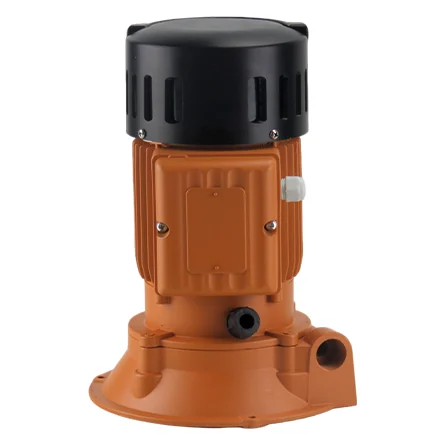
At Flyaway, our engineering practice centers on selecting optimal equipment for liquid transfer, thermal regulation, and overall system longevity across diverse commercial and industrial installations. Every single circulation pump we deploy is specifically chosen to handle specific thermal demands across diverse projects and rigorous operating conditions, ensuring complete reliability from day one. A circulation pump plays a foundational and irreplaceable role in maintaining stable, uninterrupted fluid movement across a diverse variety of closed and semi-closed hydraulic loops, including small industrial processing workshops, advanced boiler setups, and large-scale solar hot water systems. Unlike standard booster pumps that prioritize high-pressure water delivery for domestic taps or municipal distribution, a high-quality circulation pump is meticulously engineered to continuously overcome pipe friction, dynamic head loss, and system resistance while ensuring perfectly uniform thermal distribution throughout the entire network. Furthermore, integrating a durable circulation pump helps engineers achieve better hydraulic balance across complex piping networks, ensuring that every terminal unit receives adequate flow under all operating conditions without fail. Modern facilities rely heavily on this core mechanical device to keep thermal management systems running at peak efficiency every single day.
The primary operational advantage of deploying a reliable circulation pump lies entirely in its robust capability to deliver stable liquid circulation and cooling across highly specialized operational environments. Within small industrial processing workshops or closed-loop thermal networks, maintaining precise and consistent flow rates is essential to preventing localized overheating and severe thermal stress on sensitive mechanical machinery. By keeping the thermal transfer medium moving continuously without stagnation, these advanced units protect critical components from thermal degradation, reduce ongoing maintenance costs, and significantly improve overall operational efficiency without demanding excessive electrical input from the facility's power grid. When facility managers choose an upgraded circulation pump, they immediately notice a drop in unexpected thermal shutdowns and improved temperature consistency across all production lines. Each designated circulation pump undergoes rigorous factory testing to ensure stability under peak load and continuous operation. Proper cooling performance directly correlates with the overall lifespan of the industrial machinery.
Another exceptionally significant application area for a modern circulation pump is residential, commercial, and industrial renewable energy integration, specifically when supporting advanced boiler installations and complex solar hot water arrays. Solar thermal setups rely heavily on smooth, continuous, and regulated fluid transfer to harvest thermal energy effectively from flat-plate or evacuated-tube collectors and transport it safely to insulated storage tanks. When paired with proper pipe sizing, high-grade thermal insulation, and accurate flow balancing valves, an efficient circulation pump ensures that heated water reaches its final destination with minimal heat loss, thereby maximizing the overall return on investment for sustainable green energy installations. Choosing the right circulation pump for these renewable loops is a hallmark of professional engineering design. Every selected unit must be fully compatible with glycols or specialized heat transfer fluids. Furthermore, seamless integration into existing heating architectures allows property owners to lower their carbon footprint significantly while maintaining comfort.
Achieving optimal performance and extended service life from a circulation pump requires exceptionally careful attention to comprehensive system design factors, including accurate fluid temperatures, ambient environmental limits, and total dynamic head pressures. In typical industrial and residential closed loops, these specialized units are engineered to handle clean water, glycol mixtures, and non-aggressive liquids efficiently while operating continuously under strict rated electrical parameters. Proper field installation—such as ensuring secure pipe flange sealing, eliminating air pockets, and precisely matching system flow resistance curves—effectively prevents destructive cavitation and premature mechanical wear, translating directly to years of dependable, trouble-free service with minimal ongoing maintenance requirements. Technicians always verify that each installed circulation pump aligns correctly with the system's total dynamic head. A well-maintained circulation pump prevents unexpected system failures during critical operating hours, supporting high productivity across the entire plant.
Modern fluid management strongly emphasizes energy conservation, and incorporating a well-matched circulation pump significantly cuts unnecessary power consumption in complex closed-loop networks. Because these systems operate directly against closed-circuit head loss rather than lifting raw water from deep underground sources, they require highly optimized hydraulic designs where a modern circulation pump expertly balances volumetric flow rates and electrical power draw. Selecting durable, corrosion-resistant internal components ensures that the circulation pump maintains its peak hydraulic performance over prolonged operational lifecycles, making it an indispensable, highly reliable asset for any professional aiming for sustainable thermal management and lower utility overhead. Ultimately, investing in a premium circulation pump guarantees long-term operational savings and system reliability across various industrial applications. Proper sizing of each unit ensures maximum efficiency across all operational cycles, delivering superior financial and environmental value to clients.

2026/10/17
Discover what a water pump is used for across homes, farms, and sites. Learn how Flyaway provides durable manufacturing and supply solutions.

2026/10/17
Discover why knowing the correct pump size protects budgets and ensures system efficiency. Learn sizing steps and Flyaway pump solutions.

2026/10/17
Discover how to choose the right farm water pump. Learn about head, flow, solar options, and reliable pump solutions by Flyaway.

2026/10/17
Discover how a small self priming water pump can simplify home water transfer, plus key installation and sizing checks.

2026/10/17
Learn how to choose a booster pump by evaluating flow, head, curves, and controls. Discover reliable pump solutions built by Flyaway.

2026/10/17
Learn the core benefits of a self priming well pump for shallow wells. Discover selection tips, operation limits, and how Flyaway delivers quality pumps.
