
 EN
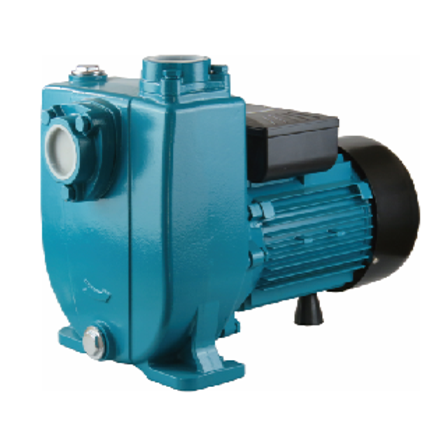
Reliable Water Movement in Modern Industrial and Commercial Facilities
Facility operations depend heavily on seamless fluid logistics. Plant managers and maintenance crews rarely focus on utility pumps until a storage reservoir requires draining, a mechanical chiller loop needs top-up fluids, or an unexpected line shutdown threatens scheduled shifts. During these critical windows, deploying a dedicated clean water transfer pump keeps facility operations running smoothly instead of forcing technicians to rely on temporary siphons, manual bailing, or mismatched drainage gear.
For procurement directors, utility supervisors, and commercial distributors, fluid equipment selection goes far beyond moving a specific volume from point A to point B. Successful operations hinge on matching specific fluid purity, dynamic head limits, duty cycles, and ongoing field service requirements. Clear distinctions between slurry handling, wastewater management, and clean fluid distribution protect core machinery while safeguarding facility uptime.
Understanding the direct engineering advantages of a clean water transfer pump ensures plant budgets target equipment that delivers lasting operational value.
Streamlining Everyday Utility and Water Handling Workflows
Routine maintenance schedules involve steady, predictable fluid relocation tasks. These everyday jobs include draining hot-water buffer tanks for annual coil inspections, clearing municipal supply lines prior to fitting updates, distributing treated wash-down supplies, and redirecting non-potable harvested rainwater for grounds maintenance. Attempting these tasks with general utility gear frequently results in loose fittings, electrical hazards, and disorganized work areas.
Standardizing on a dedicated clean water transfer pump transforms improvised jobs into standardized operational steps:
-
Pre-configured suction hoses and quick-disconnect cam-lock fittings reduce line preparation time.
-
Dedicated discharge lines eliminate workplace tripping hazards and prevent surface splashing.
-
Verified electrical breaker capacities protect control panels from sudden amp spikes.
-
Controlled liquid routing keeps clear water completely isolated from electrical enclosures, precision CNC machines, and cleanroom floors.
Structured fluid transfers safeguard adjacent facility equipment and minimize unplanned interruptions across plant departments.
Fluid Purity Boundaries and Category Classification
Maintenance teams benefit when equipment boundaries are enforced rigorously across utility cribs. The table below outlines operational thresholds between standard clean water units and alternative pump classes:
|
Application Category |
Permissible Solids Limit |
Typical Facility Applications |
Recommended Impeller & Seal Configuration |
Primary Failure Risk if Mismatched |
|---|---|---|---|---|
|
Clean Water Transfer Pump |
Clear water only (<0.1% solids, <0.2 mm particle size) |
Closed loop chillers, buffer tank drain-down, potable line testing |
Closed bronze/brass impeller with carbon-ceramic mechanical seal |
Rapid seal face scoring, internal abrasive erosion |
|
Semi-Trash / Dewatering Pump |
Suspended solids up to 10 mm (soft silt, sand) |
Sumps, foundation pits, rainwater retention basins |
Semi-open cast iron impeller with silicon carbide seal |
Clogging from stringy debris, reduced hydraulic head |
|
Full Trash / Slurry Pump |
Non-compressible solids up to 25–50 mm |
Process sludge, construction site drainage, sewage bypass |
Recessed vortex impeller with tungsten carbide faces |
Excessive power consumption on clear water circuits |
Deploying a clean water transfer pump strictly reserved for clear fluid circuits preserves critical process integrity. The internal mechanical seals, volute casing, and internal impellers remain free from abrasive sand, slurry fragments, and chemical wash residue. Maintaining this barrier protects downstream valves, high-efficiency plate heat exchangers, and secondary filtration cartridges from premature fouling.
If a project involves wastewater with visible gravel, mud, stringy fibers, or suspended industrial solids, work should pause immediately. Selecting a dedicated industrial transfer pump rated specifically for suspended solids avoids ruined impellers, burned-out motor windings, and unnecessary maintenance costs. Clear equipment roles protect equipment life across the plant.
Accelerating Shift Response Times for Plant Maintenance Crews
When a plant cooling loop needs servicing or a plumbing riser requires draining for scheduled pipe replacement, every idle minute affects operational performance. Shift workers facing urgent repairs cannot afford to spend hours troubleshooting mismatched hose barbs or tracking down priming plugs.
Equipping utility tool cribs with a ready-to-run clean water transfer pump standardizes emergency and planned procedures alike:
-
Ready-to-deploy hose kits reduce staging time from hours to minutes.
-
Matched suction strainers prevent stray metal shavings or pipe rust from entering the pump casing.
-
Universal electrical connections allow seamless operation across different shift teams.
-
Documented priming and de-priming routines reduce operator error during high-pressure repairs.
Consistent equipment also simplifies preventative maintenance routines. Technicians familiar with one clean water transfer pump design can swiftly execute routine priming, air bleed-off, seal lubrication checks, and pack-away procedures. This repeatable process cuts setup times significantly.
Engineering Criteria for Industrial Sizing and Selection
Facility engineers and wholesale purchasing managers evaluate pump specifications against real-world operating conditions rather than nominal catalog benchmarks. The table below outlines key technical parameters required for system sizing:
|
Engineering Parameter |
Technical Definition & Measurement |
Practical Plant Implication |
Sizing Rule of Thumb |
|---|---|---|---|
|
Total Dynamic Head (TDH) |
Vertical static lift plus dynamic friction losses ($H_{static} + H_{friction} + H_{pressure}$) |
Determines whether fluid reaches elevated tanks or overcoming long hose runs |
Add 15–20% safety margin above calculated friction losses |
|
NPSH Margin (NPSHA>NPSHR) |
Net Positive Suction Head Available versus Net Positive Suction Head Required |
Prevents localized vacuum boiling that causes destructive cavitation pitting |
Maintain $NPSH_A$ at least 0.5 to 1.0 m above manufacturer $NPSH_R$ |
|
Impeller & Shaft Metallurgy |
Material grade (e.g., SUS304/SUS316 shaft, brass/PPO impeller) |
Controls corrosion resistance during prolonged stagnant storage periods |
Specify stainless shafts for seasonal or intermittent transfer tasks |
|
Electrical Enclosure & Duty |
Motor insulation class and ingress protection rating (IP54 / IP55 / IP68) |
Defines continuous run capability and moisture resistance in wet plant basements |
Select TEFC motors rated for Class F insulation for heavy duty cycles |
For distribution partners assembling an attractive commercial wholesale water pump catalog, offering units categorized clearly by flow rate, continuous head capacity, and seal durability meets procurement needs directly.
Preventative Maintenance and Shift Handover Protocols
Routine preventive care keeps utility pumping equipment ready for service throughout demanding seasonal cycles. Following a structured inspection regimen delivers significant returns in operational dependability:
-
Pre-Operation Electrical Audit: Technicians must inspect electrical supply cables for crushed insulation, test ground-fault interrupters, and verify terminal box seals before energizing the drive.
-
Intake Line Verification: Inspect suction hoses for internal wall delamination or soft spots that could collapse under vacuum conditions, choking fluid volume and generating vapor pockets.
-
Positive Priming Routine: Ensure pump casings are fully flooded before switching on power; running dry even for thirty seconds can permanently damage carbon-ceramic mechanical seal faces.
-
Post-Transfer Drainage and Storage: Once water movement is complete, open lower drain plugs to purge trapped moisture. This prevents mineral scale accumulation, bacterial growth, and winter freeze-cracking during warehouse storage.
Instituting these straightforward maintenance habits ensures that every clean water transfer pump in the facility inventory remains fully operational whenever needed.
Frequently Asked Questions
Can a clean water transfer pump handle lightly turbid drain water?
These units are engineered specifically for clear liquids containing no stringy solids, grit, or abrasives. When suspended matter exceeds 0.2 millimeters or particulate volume passes 0.1 percent, switching to a dedicated industrial transfer pump or trash pump avoids impeller erosion and seal failure.
What causes cavitation during clean water transfer tasks?
Cavitation occurs when available inlet pressure falls below liquid vapor pressure, creating vapor bubbles that collapse violently against internal metal faces. Common causes include undersized suction lines, excessive suction lift height, clogged strainers, or pinched intake hoses.
Why is dynamic head critical for equipment selection?
Dynamic head factors in both static vertical elevation and frictional drag generated by hose length, interior pipe roughness, check valves, and fittings. Overlooking dynamic friction results in severely reduced flow rates at discharge outlets.
Reliable Sourcing for Commercial Facilities and Global Distributors
Long-term pumping dependability relies as much on manufacturing precision as on proper on-site maintenance. Sourcing utility equipment from an experienced water pump manufacturer guarantees strict quality control standards, balanced motor windings, precision-machined mechanical seals, and uniform casting tolerances across every production batch.
For distribution networks and multinational procurement buyers seeking dependable wholesale water pump inventory, partnering with an established OEM ODM pump supplier provides access to customizable motor ratings, tailored casing configurations, and private-label packaging built to global industrial standards. Flyaway supplies verified pump solutions backed by comprehensive component testing, flexible volume manufacturing, and international supply chain support. Contact the engineering team at Flyaway to discuss application sizing, custom product builds, or bulk inventory programs for commercial facility demands.






